

1 Introduction
Neuroscience has undergone unprecedented progress over the past decades, driven by advances in neuroimaging, neurophysiology, neurostimulation, computational modelling, and artificial intelligence (AI). Correctively referred to as brain information (BI) technologies hereafter, these developments have greatly expanded our capacity to observe, decode, and even modulate brain activity with remarkable precision and speed. For instance, brain-computer interfaces (BCIs) are increasingly progressing from laboratory experiments into clinical applications, offering new hope for restoring motor and communication abilities in individuals with neurological conditions such as stroke, spinal cord injury, and amyotrophic lateral sclerosis [Wolpaw et al., 2002; Chaudhary et al., 2016; Cervera et al., 2018; Levett et al., 2024]. Beyond clinical use, BCIs are also explored for a growing range of non-medical applications, including entertainment, mental wellness, and commercial activities [Nijholt et al., 2022; Alohaly, 2024].
Recognizing the transformative potential of data-intensive human neuroscience, many countries have prioritized research in this field by establishing dedicated policies and funding large-scale research initiatives, such as the BRAIN Initiative in the USA (2013–present) and the Human Brain Project in Europe (2013–2023). Notably, these programs also address the ethical, legal, and social issues (ELSI) arising from neuroscience research [Greely et al., 2016].
A broad range of neuroethical issues has been discussed in ELSI research in neuroscience. Some of these discussions directly address the data management schemes appropriate for recent data-intensive neuroscience research, exploring how to promote global collaboration while ensuring data protection [Wiener et al., 2016; Eke et al., 2022]. Others address various ethical questions unique to neuroscience, such as the acceptability of cognitive neuroenhancement [Jotterand & Dubljević, 2016] and the alleged psychological discontinuity after undergoing deep brain stimulation [Gilbert et al., 2021], whereas some focus on broader concerns, such as the protection of research participants, public engagement, and diversity in research communities [Feinsinger et al., 2022; Mendez et al., 2022; Taylor & Rommelfanger, 2022]. Both neuroethicists and neuroscientists engage with these topics, often highlighting different normative questions [Ishida et al., 2023]. Recently, ELSI discussions have been framed within Responsible Research and Innovation (RRI), a comprehensive approach to the entire ecosystem of knowledge production [Stilgoe et al., 2013; Stilgoe & Guston, 2017; Salles et al., 2019], as indicated (for instance) in the Organisation for Economic Co-operation and Development (OECD)’s 2019 Recommendation on Responsible Innovation in Neurotechnology [OECD, 2019]. These RRI-oriented debates have emphasized the potential effect of this cutting-edge scientific domain on our social values. This concern led to the concept of “neurorights” — human rights to safeguard brain function and neural data from misuse [Ienca & Andorno, 2017; Ienca, 2021b; Yuste et al., 2017, 2021] — though its practical relevance remains debated [Bublitz, 2022].
In Japan, the general treatment of biomedical and health data is governed by the “Act on the Protection of Personal Information”. In addition, “Ethical Guidelines for Medical and Biological Research Involving Human Subjects” has influenced the conduct of research and development in biotechnology in Japan. The discussion on neuroethics grew significantly from the 2000s to the 2010s. Nakazawa et al. [2022] identified five major topics and challenges that have been actively debated: informed consent in psychiatric research and public-patient engagement, global framework creation for neuroscience research using reliable samples and data, ethical support regarding the construction of brain banks and the research surrounding their use in Japan, the study of neuromodulation technologies that affect emotions, and a reexamination of neuroscience and neurotechnology from social perspectives [Nakazawa et al., 2022]. However, this discourse has recently subsided, deviating from global trends. With the rapid advancement of neuroscience research and the evolving situation surrounding the use of BI and brain-related information, the pressing need for active ELSI discussions is increasing.
In the development of Japan’s science and technology policy, discussions and responses on ELSI are expected to play a key role in the advanced life sciences [Cabinet Office, 2016, 2019, 2020, 2021a, 2021b]. Moreover, the “Artificial Intelligence Strategy 2021” also highlights ELSI-oriented discussions concerning the use of BI [Cabinet Office, 2021a]. Researchers are now expected to play a more active role in addressing ELSI within society. Since the Second Science and Technology Basic Plan in 2001, researchers have been encouraged to engage in public communication and actively disseminate information [Cabinet Office, 2001]. The Fifth Science and Technology Basic Plan, approved by the Cabinet on January 22, 2016, emphasizes strengthening the relationship between science, technology innovation, and society, as well as promoting co-creation (or kyoso in Japanese), reemphasizing the need to promote broader science communication and collaborative shaping of research and policy agenda among relevant stakeholders [Cabinet Office, 2016]. This direction is sustained in the Sixth Science, Technology, and Innovation Basic Plan [Cabinet Office, 2021b].
While communication activities have been encouraged, the accumulation of sufficient information for effective communication remains limited. To build a communication infrastructure for emerging science and technology, such as BI, it is essential to understand public concerns and the factors influencing public acceptance. Simultaneously, the scientists’ interests and attitudes, as well as the gaps in interest between the public and scientists, should be considered.
Similar surveys in Japan have been conducted in stem cell research and regenerative medicine [Shineha et al., 2018], and genome-edited food (GEF) [Kato-Nitta et al., 2019; Shineha et al., 2024]. In the case of stem cell research and regenerative medicine, findings revealed that while experts acknowledged the importance of topics and factors on the mechanism and scientific validation of regenerative medicine, the Japanese public was more concerned about governance issues after implementation, including cost, risk management, and clarification of responsibility and liability [Shineha et al., 2018]. For international comparison, these Japanese trends are similar to those observed in South Korea [Shineha et al., 2022]. For GEF, studies have shown that the Japanese public holds a “wait and watch” attitude, with high demand for basic information and concerns about effective risk governance systems. However, experts emphasized the adequacy of the mechanism, the necessity of technology, and trust in the scientific community [Shineha et al., 2024]. Interestingly, the Japanese public showed moderate attitudes toward GEF compared with genetically modified organisms [Kato-Nitta et al., 2019]. These findings indicate that differences in concerns may not necessarily extend to other topics. It is important to conduct detailed analyses and communicate on each emerging science and technology, including neuroscience. In addition, previous studies have shown that mass media discourse shapes public attitudes toward biotechnologies such as stem cell research and regenerative medicine [Shineha, 2016; Shineha et al., 2017]. Therefore, it is valuable to examine how media coverage influences public understanding of neuroscience and the associated ethical and social concerns.
In previous literature on public attitudes toward ELSI in neuroscience — such as research by MacDuffie et al. [2022], an online survey conducted in the US — differences in attitudes regarding the prioritization of ethical guidelines for neuroscience were examined. They surveyed 1,088 members of the public and 66 industry professionals, finding differences in privacy, stigma, consent, and enhancement. Notably, industry professionals expressed confidence that their neural devices could address ethical concerns in their designs.
However, large-scale comparative surveys had not previously been conducted in Japan. Therefore, in this study, we aimed to identify the concerns of the Japanese public regarding neuroscience and the application of BI. We also sought to identify differences (or lack thereof) in concerns between experts and the general public to facilitate discussions on ELSI concerning neuroscience and improve communication between these two groups. Understanding these differences will provide fundamental data for improving the governance of human brain data and BI technologies.
2 Materials and methods
We conducted an online questionnaire survey, recruiting respondents from neuroscience-related academic societies via calls for participation posted on their websites or by emailing them [for similar studies using a comparable methodology, see Shineha et al., 2018, 2024]. The academic societies included science-oriented ones (e.g., Japan Neuroscience Society), clinical neurology-oriented ones (e.g., Japan Neurosurgical Society), and those at the intersection of neurology and psychiatry (e.g., Japanese Society of Psychiatry and Neurology). We also recruited participants from the Center for Information and Neural Networks Integration (CiNet), a major neuroscience research institution in Japan. The survey was conducted between July 9, 2022, and August 19, 2022, and included 108 respondents referred to as “neuroscientists” in the subsequent text. For the non-expert sample, we recruited 2,000 respondents through Rakuten Insight Co., Ltd. and collected 2,000 completed questionnaires, ensuring equal representation across different age groups and genders. The survey was conducted between July 4, 2022, and July 5, 2022. In the subsequent text, these respondents are referred to as “the general public”.1
At the beginning of the questionnaire, we stated the purpose of the survey and how the data would be used. Respondents answered the questions after agreeing to this purpose and were given the option to opt out and delete their responses. The study was explained to respondents in the online questionnaire, including that participation would occur online and that all data would be de-identified and reported only in the aggregate. No sensitive questions were included in this survey (Supplementary material 1). All participants acknowledged an informed consent statement to participate in the study through Rakuten Insight Co.
Table 1 shows a summary of the basic structure of the survey, including examples of the actual questions (originally administered in Japanese and translated into English). The questionnaire compared the perspectives of the general public and neuroscientists on what they wished to learn about and communicate regarding the use of BI technologies, the key factors influencing societal acceptance of BI applications, and the impact of mass media coverage on neuroscience and BI use.
|
Theme |
Focused themes |
Sample questions |
References on previous studies |
|
Recognition of BI |
Recognition of keywords of BI Opinions on the promotion of neuroscience Opinions on the promotion of BI Opinions on social acceptance of BI Opinions and expected fields of application of BI |
For experts/non-experts: “Do you approve or disapprove of the promotion of neuroscience research? Circle one from 5 (Approved) to 1 (Disapproved).” For experts/non-experts: “Do you think the use of brain information for the following purposes will become accepted in the future? Circle one for each item from 5 (Acceptable) to 1 (Unacceptable).” | |
|
Interest topics on BI |
Interested topics for communication Important factors for social acceptance |
For non-experts: “What would you like to know in relation to the use of BI? Please select up to five items from the list below.” For experts: “What would you like to inform the general public in relation to the use of BI? Please select up to five items from the list below.” |
[Shineha et al., 2018, 2024; Hayashi & Morikawa, 1994; Kitada & Hayashi, 1999] |
|
Interest/concern regarding ethical guidelines on BI |
Prevailing interests/concerns to be addressed in the ethical guidelines on the use of BI |
For experts/non-experts: “Which items should be included in ethical guidelines for the use of BI? Circle one for each item from 5 (Important) to 1 (Not important).” |
[Presidential Commission for the Study of Bioethical Issues, 2014, 2015; Ienca, 2021a; MacDuffie et al., 2022] |
|
Social influence of the media Media usage |
Opinions on media effects on public attitudes and opinions |
For experts/non-experts: “For each of the following items, please choose the degree to which you agree with the opinion about the influence of the mass media coverage of neuroscience. Circle one for each item from 5 (Agree) to 1 (Disagree).” | |
|
Scientific literacy |
Literacy about biology Self-evaluation of knowledge on neuroscience |
For non-experts: “The oxygen we use to breathe comes from plants. (True / False).” | |
|
Demography | Age, Gender, Education, Income, Expertise, Occupation, and Religious Affiliation.
| ||
We conducted a cross-table analysis to compare attitudes between experts and the public with chi-squared tests. We used SPSS 26.0 for our statistical analysis.
3 Results
3.1 Characteristics of general public respondents
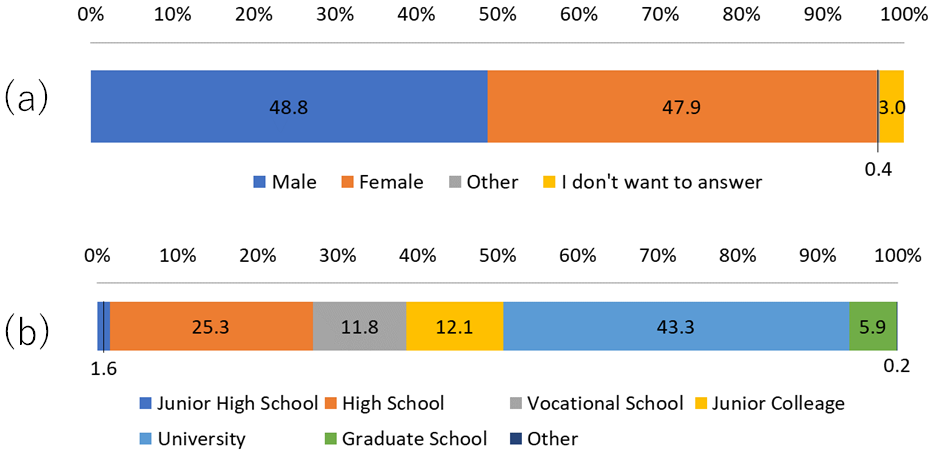
A general public sample was designed to achieve near-equal representation across gender (Figure 1a) and age groups, with 400 respondents per age category (29 or younger, 30–39, 40–49, 50–59, and 60 or older). Respondents had diverse educational backgrounds in terms of highest educational attainment (see demographic question F4 in Supplementary material 1), with “university” being the most common (865 respondents; 43.3%), followed by “high school” (506; 25.3%) (Figure 1b).
In the general public, scientific literacy in biology was assessed using 14 biology-related questions — not directly related to neuroscience in particular — from two internationally recognized sets of literacy questions [Drummond & Fischhoff, 2017; Fernbach et al., 2019] (see Supplementary material 1). The mean score was 10.26 (SD ± 2.202).
3.2 Respondent characteristics among neuroscientists
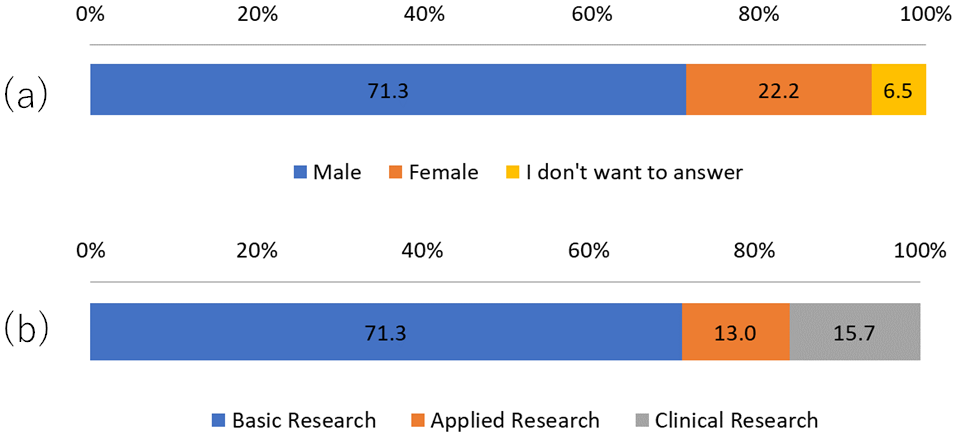
Figures 2a and 2b present an overview of the respondent characteristics of expert neuroscientists recruited through academic societies mentioned above. Among them, 77 respondents (71.3%) were male, 24 (22.2%) were female, and 7 (6.5%) preferred not to disclose their gender (Figure 2a). Figure 2b shows the distribution of their research fields; 77 researchers (71.3%) were engaged in basic research, 14 (13.0%) in applied research (oyo kenkyu, a Japanese term referring to one of two domains of “applied research” in its broader sense, which involves applying the result of basic science to technological and pharmaceutical developments), and 17 (15.7%) in clinical research (rinsho kenkyu, the other domain of “applied research”, where the clinical efficacy (e.g., safety) of oyo kenkyu outcomes is evaluated through trials involving human participants). The age of respondents ranged from 20 to 74 years, with the highest proportion (14.8%) in the group of 45–49. The respondents’ degrees and employment status were not asked, not only because their membership of one or more neuroscientific societies can be understood as a proxy for their minimal expertise on the relevant field, but also because of the rough correlation between academic degree status and age (asked in the demographic question F1, Supplementary material 2) in the Japanese context.
3.3 Perceptions concerning neuroscience and BI use
Figure 3a shows the attitudes of general public respondents towards promoting neuroscience research and the use of BI. Notably, 1,273 respondents (63.6%) either “approve” or “somewhat approve” of promoting neuroscience research, 664 (33.2%) “neither approve nor disapprove”, and 63 (3.2%) either “somewhat disapprove” or “disapprove” of promoting this field. Figure 3b presents their views on the use of BI; 1,280 respondents (64.0%) viewed it positively, 634 (31.7%) neutrally or undecided, and 86 (4.3%) negatively.
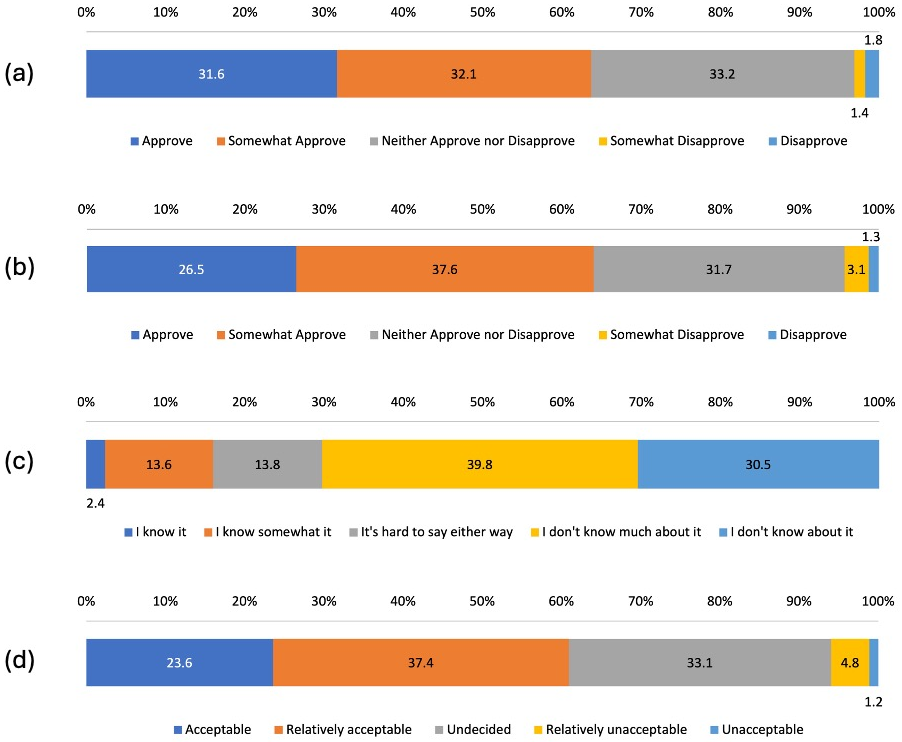
Figure 3c shows that most non-expert respondents acknowledged their limited knowledge of neuroscience. As for their views on future social acceptance of BI use, presented in Figure 3d, 1,219 (61.0%) of the general public respondents deemed it either “acceptable” or “relatively acceptable”, while 119 (6.0%) considered it either “relatively unacceptable” or “unacceptable”, indicating that the proportion of respondents with a negative outlook on BI use and its societal acceptance was relatively small; however, at the same time, a substantial proportion of the respondents (662; 33.1%) were undecided. Overall, while most respondents held a positive view of neuroscience and BI use, many expressed a “wait-and-watch” stance owing to limited knowledge and a lack of understanding of these topics.
Previous research has established that a larger gap between self-assessed knowledge (standardized score) and scientific literacy (standardized score), known as the knowledge difference score, is linked to greater opposition to the societal acceptance of technology [Fernbach et al., 2019]. However, in this study, no correlation was observed between the knowledge difference score and approval inclinations.
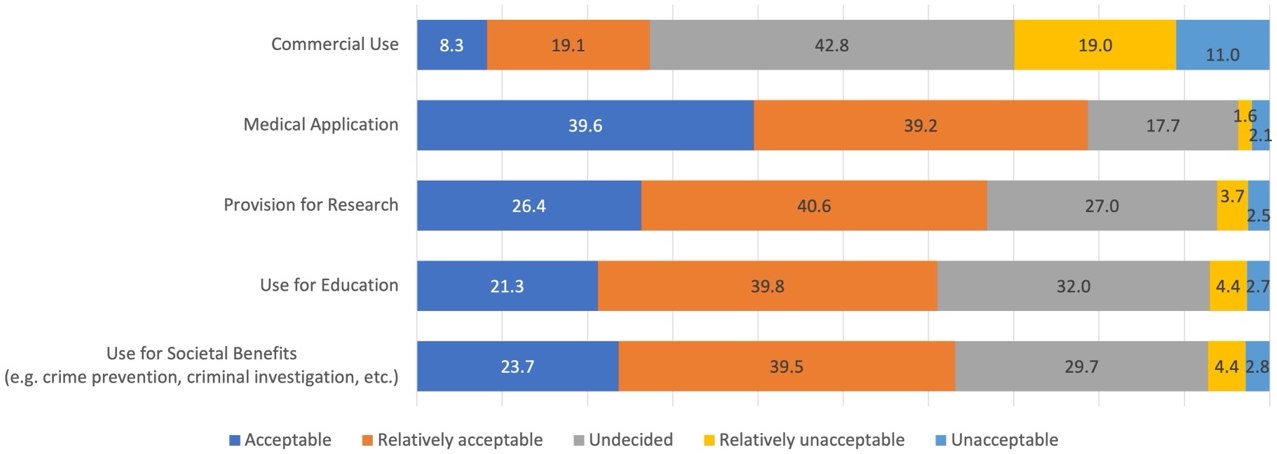
Figure 4 shows a summary of the level of acceptance among the general public respondents for various applications of BI technology. “Medical application” received the highest combined percentage of “acceptable” and “relatively acceptable” responses, totaling 1,574 (78.7%). Other applications receiving broad acceptance include “provision for research” (1,338; 66.9%), “use for education” (1,221; 61.1%), and “use for societal benefits (e.g., crime prevention and criminal investigation)” (1,263; 63.2%). Notably, while the use of neuroscience in criminal investigations and crime prevention is widely debated in neuroethics and related fields, only a small number of respondents in this survey (144; 7.2%) answered that such applications are “relatively unacceptable” or “unacceptable”. In contrast, regarding commercial use of BI, the largest share of respondents (856; 42.8%) were undecided, while 598 (29.9%) deemed it unacceptable or relatively unacceptable. The strong wording of “commercial use” may have influenced these responses; however, this disparity indicates a notable divergence in opinions compared to other survey items.
3.4 Different interests and concerns concerning BI use between the general public and neuroscientists
Figure 5 highlights contrasting interests and concerns between the general public and experts regarding the use of BI technologies. General public respondents were asked what they would like to know, whereas experts were asked what they would like to communicate — that is, what they would want non-experts to know.
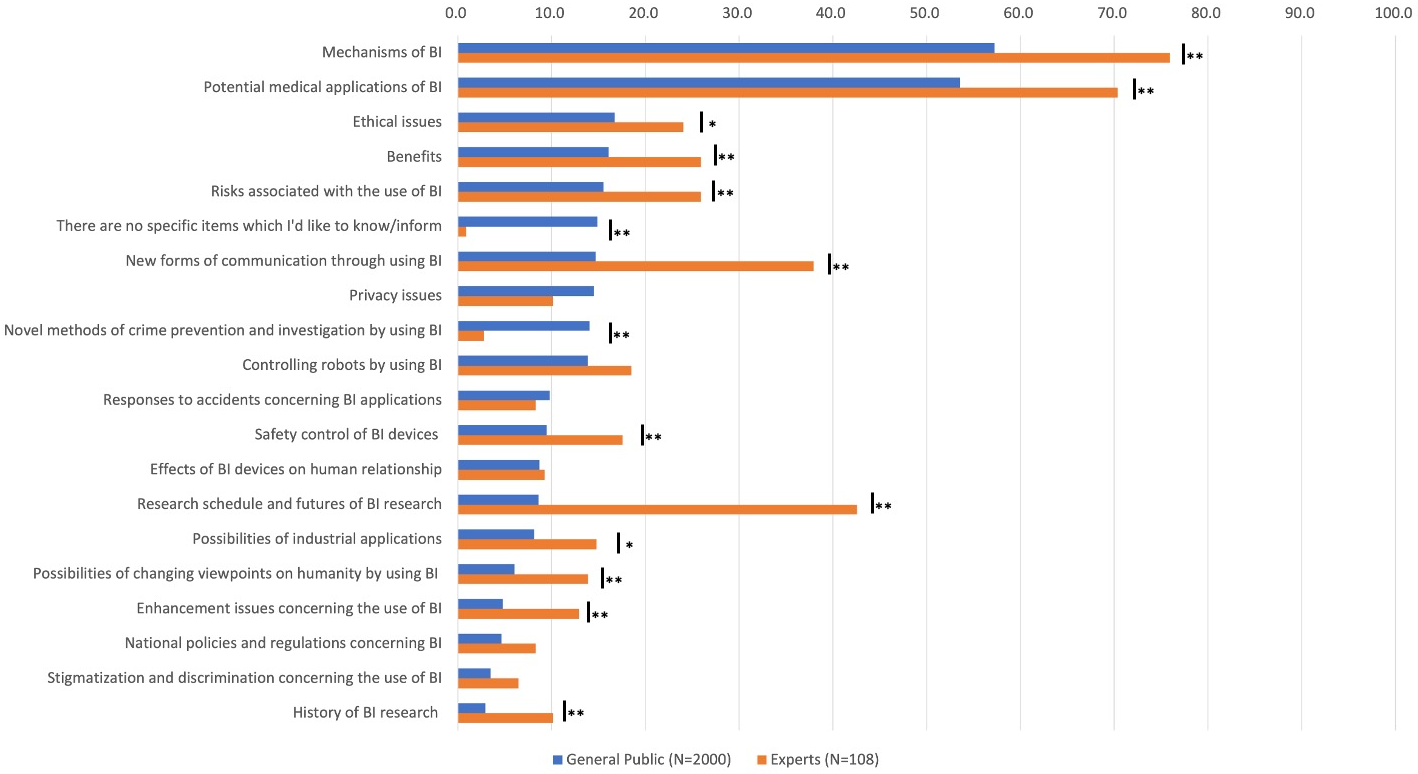
The general public’s top interests were mechanisms (1,145 responses; 57.3%) and potential medical applications (1,071; 53.6%). These two topics clearly dominated; however, lower but notable levels of interest were observed for ethical and privacy-related issues, benefits and risks, and applications of BI technologies in communication, criminal justice, and robotics.
Among experts, the most selected items were mechanisms (82 responses; 75.9%) and potential medical applications (76; 70.4%), consistent with the patterns observed among general public respondents. However, experts showed significantly greater interest in “research schedule and futures of research on BI” (46; 42.6%) and “new forms of communication using BI” (41; 38.0%), both of which ranked among the top expert-selected items and differed significantly between groups (p < 0.01).
Figure 6 shows the factors that respondents considered important for social acceptance of BI technologies. Among the general public, the three most frequently selected items were “seriousness of potential risks and accidents” (668 responses; 33.4%), “whether society can prevent abuse and misuse by regulation” (538; 26.9%), and “whether experts can deal with risks and accidents” (533; 26.7%), followed by “whether it is scientifically interesting or not”, “whether BI technology is necessary to the society”, and “scientific validity”.
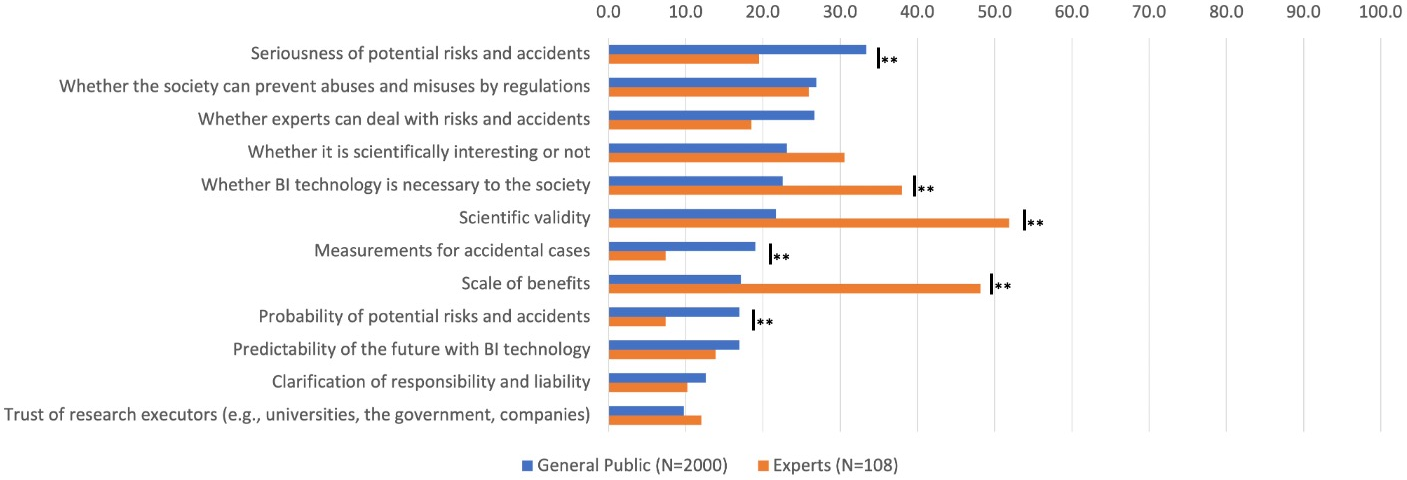
In contrast, experts most frequently selected “scientific validity” (56 answers; 51.9%), “scale of benefits” (52; 48.1%), and “whether BI technology is necessary to society” (41; 38.0%), all of which differed significantly from general public responses (p < 0.01). Another frequently selected expert-rated item was “interesting or not from a scientific perspective” (33; 30.6%). Notably, only 21 experts (19.4%) selected “seriousness of potential risks and accidents”, the top-ranked item among the general public respondents (p < 0.01).
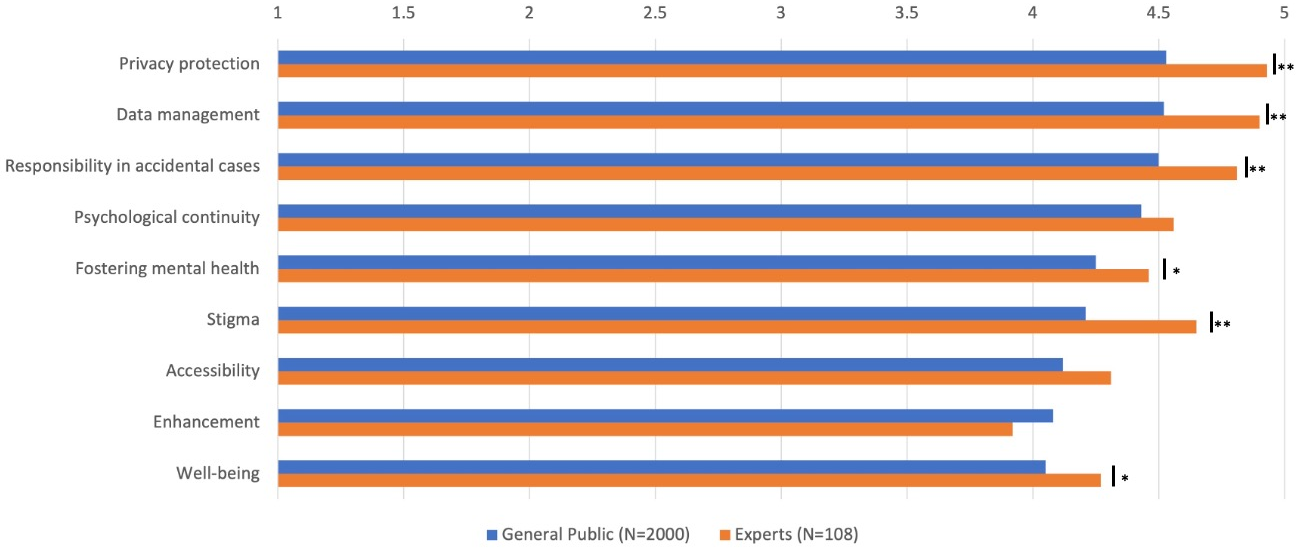
Figure 7 presents responses regarding which items should be included in ethical guidelines for the use of BI technologies and their perceived significance. Among the general public, items related to “data management”, “privacy”, “responsibility in accidental cases”, and “psychological continuity” were most highly prioritised, with more than 80% of respondents rating each as important (5) or somewhat important (4). Neuroscientists similarly rated these items as highly important. By contrast, issues related to stigma, accessibility, enhancement, and well-being were assigned lower importance by the general public than by neuroscientists; stigma, in particular, was more highly rated among expert respondents.
3.5 Perceptions of mass media coverage, social incidents, and institutions related to neuroscience
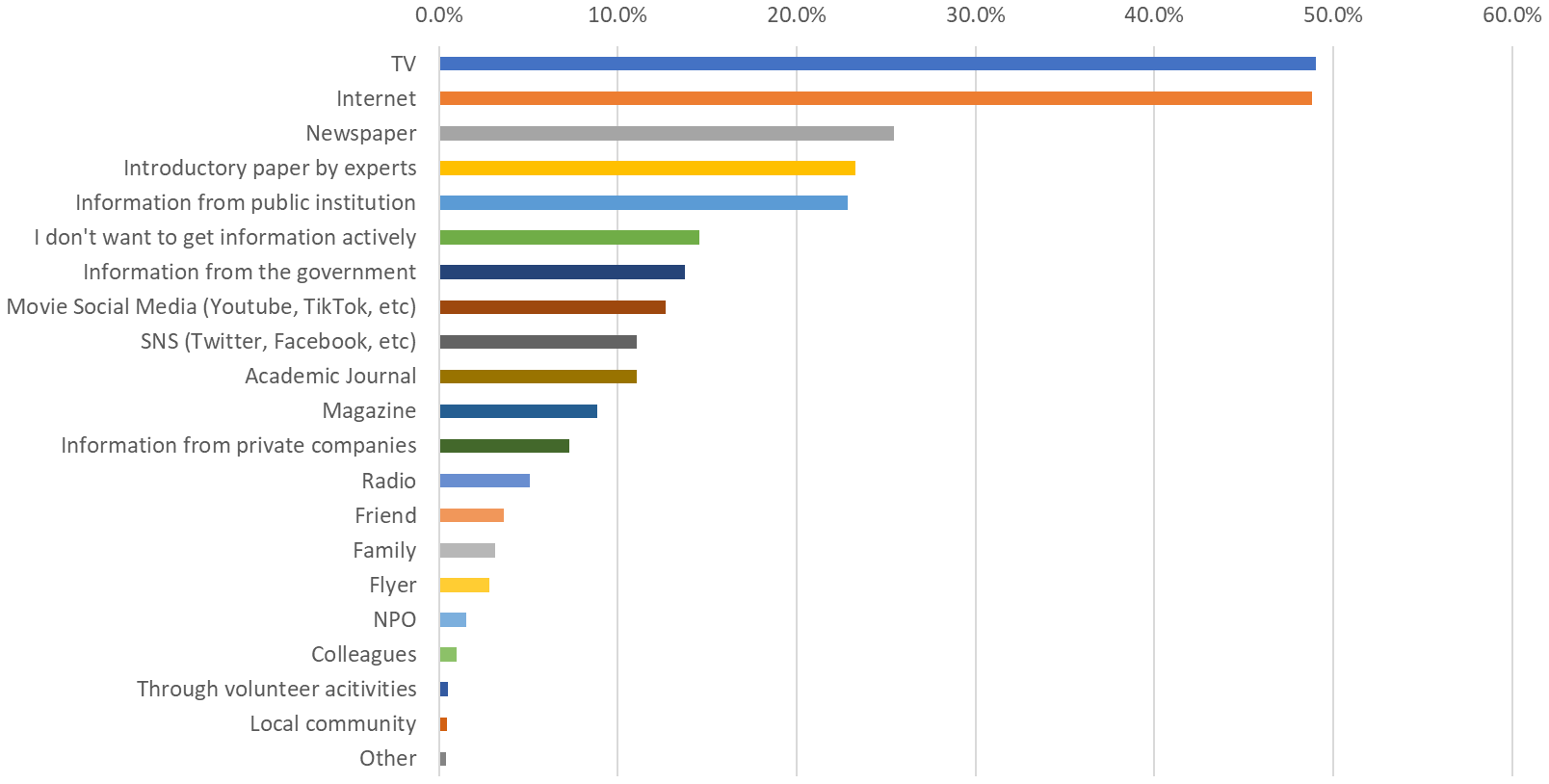
Figure 8 shows sources of information on neuroscience-related topics, sorted by the proportion of responses from the general public respondents. The most frequently cited sources were television (981 responses; 49.1%) and the Internet (976; 48.8%), followed by newspapers, expert commentaries, and research institutions, indicating that, in addition to the Internet, traditional media outlets such as television and newspapers also hold considerable value as information sources.
Figures 9 and 10 compare public perceptions and neuroscientists’ perceptions of mass media coverage of neuroscience. Overall, neuroscientists evaluated media coverage more negatively than the general public did across multiple dimensions, including accuracy, objectivity, balance, bias, and volume.
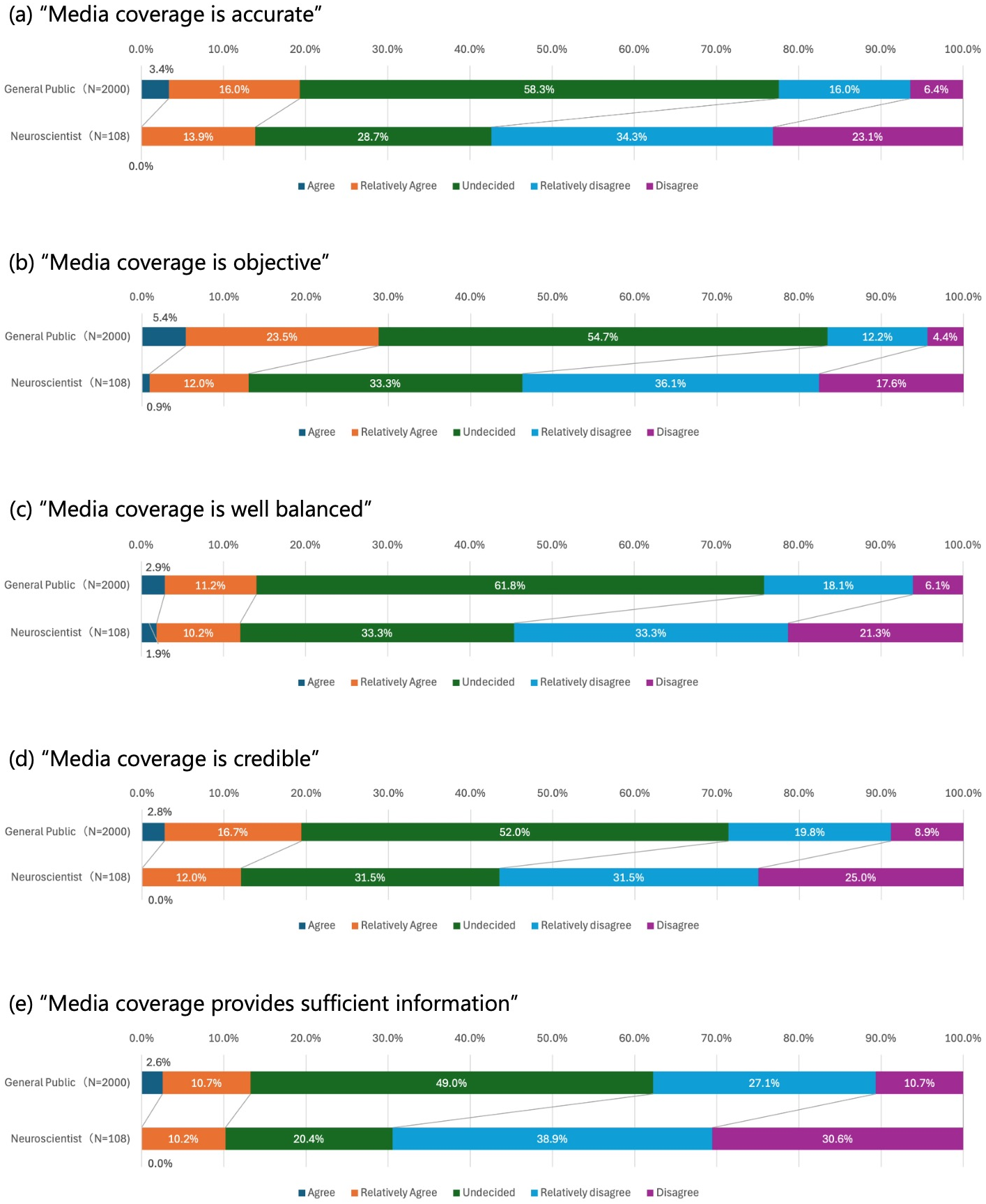
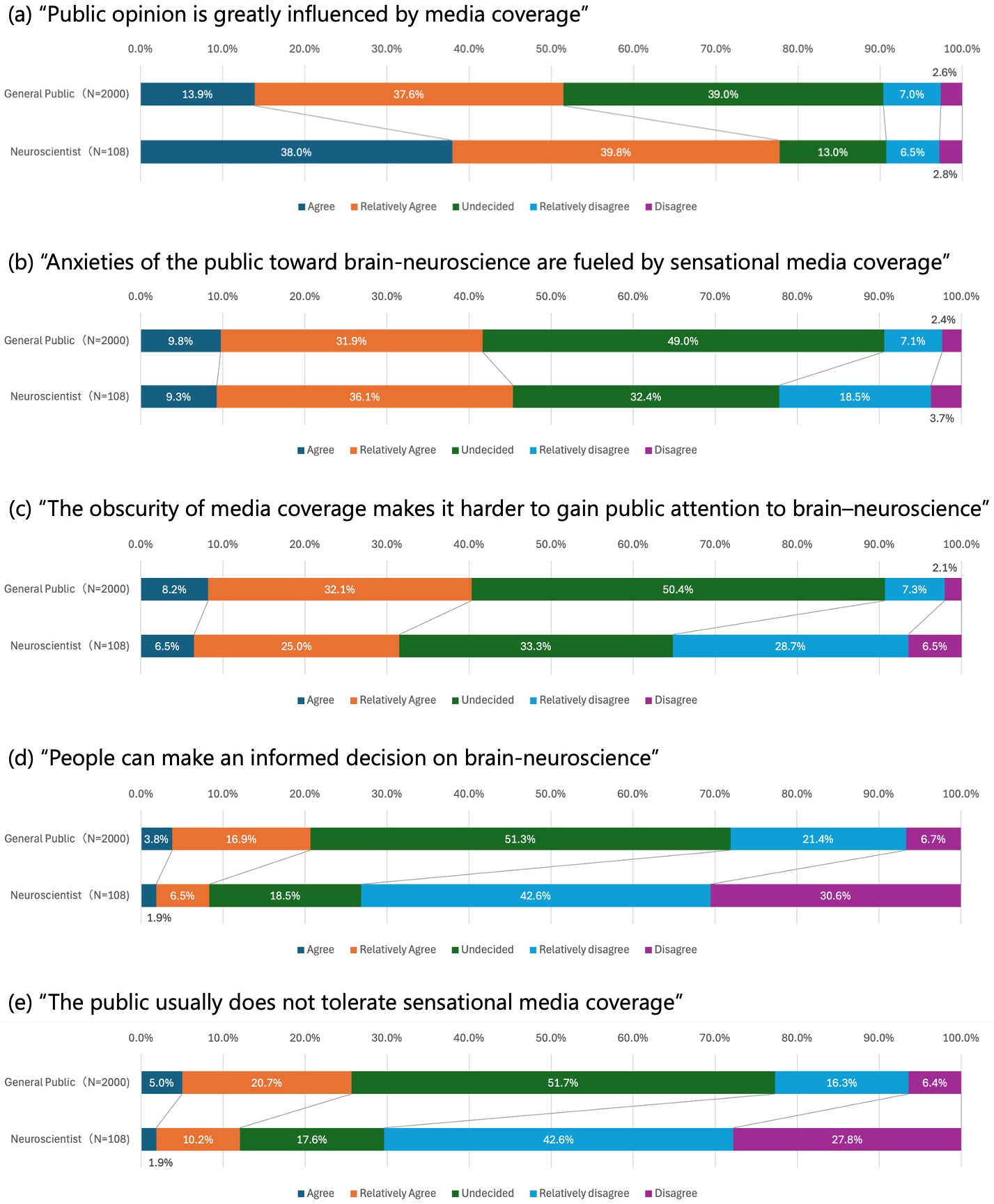
Neuroscientists also perceived the influence of mass media on public opinion and individual decision-making to be substantially greater than the general public did. For instance, when asked whether “people can choose appropriate information from the abundance of neuroscience-related content in society”, 562 general public respondents (28.1%) expressed disagreement, compared with 79 experts (73.1%). Similarly, for the statement “the public usually does not tolerate sensational media coverage”, 454 general public participants (22.7%) responded negatively, whereas a significantly larger proportion of experts (76; 70.4%) did.
4 Discussion
Our study provides several insights into the expectations and concerns surrounding neuroscience and the use of BI technologies among the general public and expert neuroscientists in Japan.
First, the general public expressed high expectations for neuroscience research and BI use, while simultaneously demonstrating a cautious “wait-and-watch” attitude resulting from limited understanding of these fields. Medical applications of BI were perceived as having the greatest potential for social acceptance, whereas commercial use was approached more cautiously.
Respondents from the general public also expressed interest in more active communication about the implications and potential applications of BI use. In particular, respondents expressed notable interest in governance-related issues associated with social implementation of this cutting-edge technology, including data governance and the potential effects on psychological continuity. However, issues such as responsibility and trust in research institutions received relatively less attention, a pattern that differs from Japanese non-expert views on regenerative medicine, another emerging biotechnology [Shineha et al., 2018, 2022].
Second, neuroscientists placed greater emphasis than the general public on scientific rigour and communication, while sharing common concerns regarding data governance. In discussions of ELSI in BI technologies, particular attention was paid to several issues, including that of stigmatization. Therefore, neuroscientists may have a comparable advantage in ELSI discussions owing to their specialized knowledge and their engagement with salient topics that are yet to receive full attention from the general public.
This advantage could be leveraged to support information sharing and to develop strategies that address information gaps among the public. Such efforts have already been initiated by individual neuroscientists and projects with various methods and participants [Roskams & Popović, 2016; Gage, 2019; Gau et al., 2021]. Findings from our study of Japanese citizens underscore the need for similar efforts and suggest that such public engagement initiatives may be valuable not only in Western societies but also in non-Western contexts. At the same time, however, translating expert knowledge into effective public engagement faces practical challenges, including limited time and resources for researchers [Das et al., 2022]. Hence, institutional support — such as providing accessible platforms, financial resources, and appropriate recognition of outreach activities alongside traditional scholarly achievements — may be essential [Shineha et al., 2017].
Third, mass media remains — and is likely to remain — a primary source of information on neuroscience in Japan. Neuroscientists evaluated media coverage more critically than the general public did, perceiving it as exerting a strong influence on public opinion. Meanwhile, our findings reveal a notable trend on the part of the general public as well: they appeared more cautious about the accuracy of neuroscience reporting, as reflected in a higher proportion of “undecided” responses, compared with their attitudes towards media coverage of regenerative medicine in a previous study [Shineha et al., 2017]. Given that these attitudes do not reflect indifference — respondents expressed high expectations for applications of BI technologies, particularly in clinical contexts — this pattern may suggest that Japanese citizens approach media portrayals of brain science with greater scepticism than they did with earlier biotechnology.
Consistent with this interpretation, prior research indicates that Japanese newspaper coverage of neuroscience is generally more positive than that of other biotechnologies, such as regenerative medicine and genetically modified organisms [Takeda et al., 2025]. While this relative positivity may help stimulate public interest, it may also contribute to inflated expectations. Notably, exaggerations in media reporting can originate from scientists themselves [Sumner et al., 2014], underscoring the need to consider the broader media ecosystem when developing science communication strategies. Moreover, much of the neuroscience-related information circulating online originates from traditional mass media, thereby sustaining the agenda-setting power of these media outlets [McCombs, 2014]. Collectively, these considerations suggest that the active dissemination of high-quality information by experts remains particularly important and thus is encouraged.
Again, notable disparities were observed between the normative concerns highlighted by neuroscientists and those highlighted by the general public. As expected, experts paid more attention to scientific and technological aspects, but they also placed greater weight on certain normative issues, such as stigma, than the general public did. Rather than deciding which group holds the “right” concerns, acknowledging and addressing these disparities is crucial for effective science communication, guideline development, and institutional design.
Furthermore, areas of convergence between expert and public perspectives were evident, most notably in data governance. Within the related literature, data-related concerns have often been framed through a “data lifecycle” approach [Fothergill et al., 2019; Eke et al., 2022]. This framework covers issues such as the ownership and value of personal data; the use of open or broad consent for data provision beyond traditional informed consent; the potential for dynamic consent to support ongoing research participation; adherence to data protection regimes like the European Union’s General Data Protection Regulation; and challenges surrounding data anonymization. In this context, Salles et al. [2017], as part of the Human Brain Project, proposed a set of data protection recommendations for neuroscience, including (1) establishing a coherent data governance framework; (2) adopting a privacy model for anonymizing data intended for secondary use as a default approach; (3) implementing “privacy by design” or comparable system development methodologies; (4) exploring ICT tools to support privacy management, data protection, and dynamic consent; (5) assessing the feasibility of broad consent in light of existing data protection regulations to promote trust and transparency; (6) designing systems resilient to technical failure; and (7) conducting regular reviews to assess whether technological advances may enable the re-identification of anonymized data. Collectively, these discussions provide important reference points for future data governance discussions in Japan, though some adaptation may be required to reflect its specific societal and regulatory context.
Finally, some limitations should be acknowledged. In our survey, there were large differences between the general public respondents and neuroscientists. However, as a common limitation of online surveys, our study may not fully reflect the actual situation in Japan. In addition, neuroscientists were recruited by posting on neuroscience-related academic society websites and by emailing them and CiNet researchers, which may have also introduced sampling biases. For instance, neurosurgical specialists may be underrepresented among the “expert” respondents in this study, unless they are also captured by our recruitment method as specialists in basic neuroscience or neuroinformatics. However, this is one of the first reports with a large number of general public respondents. Thus, we believe that our results will provide an important reference for discussions of science communication in neuroscience.
Currently, rapid advances in neuroscience and BI make it difficult to accurately envision the future, complicating discussions of the expected state of governance. We hope our findings will help facilitate dialogue among a wide range of stakeholders.
5 Conclusion
In this study, we compared the attitudes of the general public and neuroscientists toward neuroscience and BI. The general public expressed high expectations for neuroscience research and BI use; however, they also expressed a cautious “wait-and-watch” attitude. Notably, several different framings of concerns regarding BI use exist. For instance, although both parties agreed on the importance of data governance, the general public also showed interest in the philosophically laden issue of psychological continuity, whereas neuroscientists placed more emphasis on scientific content. Simultaneously, neuroscientists also engaged in more careful discussions around ELSI, such as the issue of stigmatization and enhancement. This advantage should be leveraged in information sharing and in developing countermeasures. Moving forward, we need to advance the dialogue, considering these different framings and attitudes toward the media’s effects on public understanding of neuroscience.
Acknowledgments
This study was supported by JST-RISTEX RInCA program “Implementation and systematisation of RRI assessment model on emerging science and technology” (PI: Ryuma Shineha, JPMJRX20J2), JST ERATO BRAIN-AI Hybrid Project (PI: Ikegaya Yuji, JPMJER1801), and also HITE program “Practice of technology assessment through deliberations on Brain-AI science” (Group PI: Ryuma Shineha, J219901055).
Data/software/code availability statements
Data will be supplied according to requests.
References
-
Alohaly, M. (2024, June 14). The brain computer interface market is growing — but what are the risks? World Economic Forum. https://www.weforum.org/stories/2024/06/the-brain-computer-interface-market-is-growing-but-what-are-the-risks/
-
Bublitz, J. C. (2022). Novel neurorights: from nonsense to substance. Neuroethics, 15(1), 7. https://doi.org/10.1007/s12152-022-09481-3
-
Cabinet Office. (2001). The second science and technology basic plan. http://www8.cao.go.jp/cstp/kihonkeikaku/honbun.html
-
Cabinet Office. (2016). The fifth science and technology basic plan. http://www8.cao.go.jp/cstp/kihonkeikaku/5honbun.pdf
-
Cabinet Office. (2019). Bio-strategy 2019: formation of bio-community with global resonance. https://www8.cao.go.jp/cstp/bio/bio2019_honbun.pdf
-
Cabinet Office. (2020). Bio-strategy 2020: basic policies. https://www8.cao.go.jp/cstp/bio/bio2020_honbun.pdf
-
Cabinet Office. (2021a). AI strategy 2021. https://www8.cao.go.jp/cstp/ai/aistrategy2021_honbun.pdf
-
Cabinet Office. (2021b). The sixth science, technology, and innovation basic plan. https://www8.cao.go.jp/cstp/kihonkeikaku/6honbun.pdf
-
Cervera, M. A., Soekadar, S. R., Ushiba, J., Millán, J. R., Liu, M., Birbaumer, N., & Garipelli, G. (2018). Brain-computer interfaces for post-stroke motor rehabilitation: a meta-analysis. Annals of Clinical and Translational Neurology, 5(5), 651–663. https://doi.org/10.1002/acn3.544
-
Chaudhary, U., Birbaumer, N., & Ramos-Murguialday, A. (2016). Brain-computer interfaces for communication and rehabilitation. Nature Reviews Neurology, 12(9), 513–525. https://doi.org/10.1038/nrneurol.2016.113
-
Das, J., Forlini, C., Porcello, D. M., Rommelfanger, K. S., Salles, A., & Global Neuroethics Summit Delegates. (2022). Neuroscience is ready for neuroethics engagement. Frontiers in Communication, 7, 909964. https://doi.org/10.3389/fcomm.2022.909964
-
Drummond, C., & Fischhoff, B. (2017). Individuals with greater science literacy and education have more polarized beliefs on controversial science topics. Proceedings of the National Academy of Sciences, 114(36), 9587–9592. https://doi.org/10.1073/pnas.1704882114
-
Eke, D. O., Bernard, A., Bjaalie, J. G., Chavarriaga, R., Hanakawa, T., Hannan, A. J., Hill, S. L., Martone, M. E., McMahon, A., Ruebel, O., Crook, S., Thiels, E., & Pestilli, F. (2022). International data governance for neuroscience. Neuron, 110(4), 600–612. https://doi.org/10.1016/j.neuron.2021.11.017
-
Feinsinger, A., Pouratian, N., Ebadi, H., Adolphs, R., Andersen, R., Beauchamp, M. S., Chang, E. F., Crone, N. E., Collinger, J. L., Fried, I., Mamelak, A., Richardson, M., Rutishauser, U., Sheth, S. A., Suthana, N., Tandon, N., & Yoshor, D. on behalf of the NIH Research Opportunities in Humans Consortium. (2022). Ethical commitments, principles, and practices guiding intracranial neuroscientific research in humans. Neuron, 110(2), 188–194. https://doi.org/10.1016/j.neuron.2021.11.011
-
Fernbach, P. M., Light, N., Scott, S. E., Inbar, Y., & Rozin, P. (2019). Extreme opponents of genetically modified foods know the least but think they know the most. Nature Human Behaviour, 3(3), 251–256. https://doi.org/10.1038/s41562-018-0520-3
-
Fothergill, B. T., Knight, W., Stahl, B. C., & Ulnicane, I. (2019). Responsible data governance of neuroscience big data. Frontiers in Neuroinformatics, 13, 28. https://doi.org/10.3389/fninf.2019.00028
-
Gage, G. J. (2019). The case for neuroscience research in the classroom. Neuron, 102(5), 914–917. https://doi.org/10.1016/j.neuron.2019.04.007
-
Gau, R., Noble, S., Heuer, K., Bottenhorn, K. L., Bilgin, I. P., Yang, Y.-F., Huntenburg, J. M., Bayer, J. M. M., Bethlehem, R. A. I., Rhoads, S. A., Vogelbacher, C., Borghesani, V., Levitis, E., Wang, H.-T., Van Den Bossche, S., Kobeleva, X., Legarreta, J. H., Guay, S., Atay, S. M., … The Brainhack Community. (2021). Brainhack: developing a culture of open, inclusive, community-driven neuroscience. Neuron, 109(11), 1769–1775. https://doi.org/10.1016/j.neuron.2021.04.001
-
Gilbert, F., Viaña, J. N. M., & Ineichen, C. (2021). Deflating the “DBS causes personality changes” bubble. Neuroethics, 14(S1), 1–17. https://doi.org/10.1007/s12152-018-9373-8
-
Greely, H. T., Ramos, K. M., & Grady, C. (2016). Neuroethics in the age of brain projects. Neuron, 92(3), 637–641. https://doi.org/10.1016/j.neuron.2016.10.048
-
Hayashi, C., & Morikawa, S. (1994). Attitude toward nuclear power plant and its public relations [in Japanese]. Journal of the Institute of Nuclear Safety Systems, 1, 93–158. https://www.inss.co.jp/wp-content/uploads/2025/07/1994_1J093_158.pdf
-
Ienca, M. (2021a). Common human rights challenges raised by different applications of neurotechnologies in the biomedical fields. Council of Europe. https://rm.coe.int/report-final-en/1680a429f3
-
Ienca, M. (2021b). On neurorights. Frontiers in Human Neuroscience, 15, 701258. https://doi.org/10.3389/fnhum.2021.701258
-
Ienca, M., & Andorno, R. (2017). Towards new human rights in the age of neuroscience and neurotechnology. Life Sciences, Society and Policy, 13(1), 5. https://doi.org/10.1186/s40504-017-0050-1
-
Ishida, S., Nishitsutsumi, Y., Kashioka, H., Taguchi, T., & Shineha, R. (2023). A comparative review on neuroethical issues in neuroscientific and neuroethical journals. Frontiers in Neuroscience, 17, 1160611. https://doi.org/10.3389/fnins.2023.1160611
-
Jotterand, F., & Dubljević, V. (Eds.). (2016). Cognitive enhancement: ethical and policy implications in international perspectives. Oxford University Press. https://doi.org/10.1093/acprof:oso/9780199396818.001.0001
-
Kato-Nitta, N., Maeda, T., Inagaki, Y., & Tachikawa, M. (2019). Expert and public perceptions of gene-edited crops: attitude changes in relation to scientific knowledge. Palgrave Communications, 5, 137. https://doi.org/10.1057/s41599-019-0328-4
-
Kitada, A., & Hayashi, C. (1999). The Japanese attitude towards nuclear power generation — changes as seen through time series [in Japanese]. Journal of the Institute of Nuclear Safety Systems, 6, 2–23. https://www.inss.co.jp/wp-content/uploads/2025/07/1999_6J002_023.pdf
-
Levett, J. J., Elkaim, L. M., Niazi, F., Weber, M. H., Iorio-Morin, C., Bonizzato, M., & Weil, A. G. (2024). Invasive brain computer interface for motor restoration in spinal cord injury: a systematic review. Neuromodulation: Technology at the Neural Interface, 27(4), 597–603. https://doi.org/10.1016/j.neurom.2023.10.006
-
MacDuffie, K. E., Ransom, S., & Klein, E. (2022). Neuroethics inside and out: a comparative survey of neural device industry representatives and the general public on ethical issues and principles in neurotechnology. AJOB Neuroscience, 13(1), 44–54. https://doi.org/10.1080/21507740.2021.1896596
-
McCombs, M. (2014). Setting agenda: the mass media and public opinion (2nd ed.). Polity Press.
-
Mendez, J. C., Perry, B. A. L., Heppenstall, R. J., Mason, S., & Mitchell, A. S. (2022). Openness about animal research increases public support. Nature Neuroscience, 25(4), 401–403. https://doi.org/10.1038/s41593-022-01039-z
-
Nakazawa, E., Fukushi, T., Tachibana, K., Uehara, R., Arie, F., Akter, N., Maruyama, M., Morita, K., Araki, T., & Sadato, N. (2022). The way forward for neuroethics in Japan: a review of five topics surrounding present challenges. Neuroscience Research, 183, 7–16. https://doi.org/10.1016/j.neures.2022.07.006
-
Nijholt, A., Contreras-Vidal, J. L., Jeunet, C., & Väljamäe, A. (2022). Editorial: Brain-computer interfaces for non-clinical (home, sports, art, entertainment, education, well-being) applications. Frontiers in Computer Science, 4, 860619. https://doi.org/10.3389/fcomp.2022.860619
-
OECD. (2019). Recommendation of the Council on Responsible Innovation in Neurotechnology. Organisation for Economic Co-operation and Development. https://legalinstruments.oecd.org/en/instruments/OECD-LEGAL-0457
-
Presidential Commission for the Study of Bioethical Issues. (2014). Gray matters. Volume 1: Integrative approaches for neuroscience, ethics, and society. https://hdl.handle.net/10822/709231
-
Presidential Commission for the Study of Bioethical Issues. (2015). Gray matters. Volume 2: Topics at the intersection of neuroscience, ethics, and society. https://hdl.handle.net/10822/712920
-
Roskams, J., & Popović, Z. (2016). Power to the people: addressing big data challenges in neuroscience by creating a new cadre of citizen neuroscientists. Neuron, 92(3), 658–664. https://doi.org/10.1016/j.neuron.2016.10.045
-
Salles, A., Bjaalie, J. G., Evers, K., Farisco, M., Fothergill, B. T., Guerrero, M., Maslen, H., Muller, J., Prescott, T., Stahl, B. C., Walter, H., Zilles, K., & Amunts, K. (2019). The Human Brain Project: responsible brain research for the benefit of society. Neuron, 101(3), 380–384. https://doi.org/10.1016/j.neuron.2019.01.005
-
Salles, A., Stahl, B., Bjaalie, J., Domingo-Ferrer, J., Rose, N., Rainey, S., & Spranger, T. (2017). Opinion and action plan on ‘Data protection and privacy’. http://www.diva-portal.org/smash/record.jsf?pid=diva2:1287110
-
Shineha, R. (2016). Attention to stem cell research in Japanese mass media: twenty-year macrotrends and the gap between media attention and ethical, legal, and social issues. East Asian Science, Technology and Society: an International Journal, 10(3), 229–246. https://doi.org/10.1215/18752160-3326668
-
Shineha, R., Inoue, Y., Ikka, T., Kishimoto, A., & Yashiro, Y. (2017). Science communication in regenerative medicine: implications for the role of academic society and science policy. Regenerative Therapy, 7, 89–97. https://doi.org/10.1016/j.reth.2017.11.001
-
Shineha, R., Inoue, Y., Ikka, T., Kishimoto, A., & Yashiro, Y. (2018). A comparative analysis of attitudes on communication toward stem cell research and regenerative medicine between the public and the scientific community. Stem Cells Translational Medicine, 7(2), 251–257. https://doi.org/10.1002/sctm.17-0184
-
Shineha, R., Inoue, Y., & Yashiro, Y. (2022). A comparative analysis of attitudes toward stem cell research and regenerative medicine between six countries — a pilot study. Regenerative Therapy, 20, 187–193. https://doi.org/10.1016/j.reth.2022.04.007
-
Shineha, R., Takeda, K. F., Yamaguchi, Y., & Koizumi, N. (2024). A comparative analysis of attitudes toward genome-edited food among Japanese public and scientific community. PLoS ONE, 19(4), e0300107. https://doi.org/10.1371/journal.pone.0300107
-
Stilgoe, J., & Guston, D. H. (2017). Responsible research and innovation. In U. Felt, R. Fouché, C. A. Miller & L. Smith-Doerr (Eds.), The handbook of science and technology studies (4th ed., pp. 853–880). The MIT Press.
-
Stilgoe, J., Owen, R., & Macnaghten, P. (2013). Developing a framework for responsible innovation. Research Policy, 42(9), 1568–1580. https://doi.org/10.1016/j.respol.2013.05.008
-
Sumner, P., Vivian-Griffiths, S., Boivin, J., Williams, A., Venetis, C. A., Davies, A., Ogden, J., Whelan, L., Hughes, B., Dalton, B., Boy, F., & Chambers, C. D. (2014). The association between exaggeration in health related science news and academic press releases: retrospective observational study. BMJ, 349, g7015. https://doi.org/10.1136/bmj.g7015
-
Takeda, K. F., Komata, M., Takae, K., Tanaka, M., & Shineha, R. (2025). Comparative analysis of media coverage concerning the social implications on three life sciences in Japan during 1991–2020. Frontiers in Sociology, 10, 1523795. https://doi.org/10.3389/fsoc.2025.1523795
-
Taylor, L., & Rommelfanger, K. S. (2022). Mitigating white Western individualistic bias and creating more inclusive neuroscience. Nature Reviews Neuroscience, 23(7), 389–390. https://doi.org/10.1038/s41583-022-00602-8
-
Tsuchiya, T., & Kosugi, M. (2011). Differences of risk perception between citizen and academic scholars — based on results of the 2009 survey [CRIEPI Research Report Y11003] (in Japanese). https://criepi.denken.or.jp/hokokusho/pb/reportDetail?reportNoUkCode=Y11003
-
Wiener, M., Sommer, F. T., Ives, Z. G., Poldrack, R. A., & Litt, B. (2016). Enabling an open data ecosystem for the neurosciences. Neuron, 92(3), 617–621. https://doi.org/10.1016/j.neuron.2016.10.037
-
Wolpaw, J. R., Birbaumer, N., McFarland, D. J., Pfurtscheller, G., & Vaughan, T. M. (2002). Brain-computer interfaces for communication and control. Clinical Neurophysiology, 113(6), 767–791. https://doi.org/10.1016/s1388-2457(02)00057-3
-
Yuste, R., Genser, J., & Herrmann, S. (2021). It’s time for neuro-rights. Horizons, 18, 154–165.
-
Yuste, R., Goering, S., Agüera y Arcas, B., Bi, G., Carmena, J. M., Carter, A., Fins, J. J., Friesen, P., Gallant, J., Huggins, J. E., Illes, J., Kellmeyer, P., Klein, E., Marblestone, A., Mitchell, C., Parens, E., Pham, M., Rubel, A., Sadato, N., … Wolpaw, J. (2017). Four ethical priorities for neurotechnologies and AI. Nature, 551(7679), 159–163. https://doi.org/10.1038/551159a
Notes
1. This is not to assume there would be such a monolithic entity as “the public”, either in Japan or elsewhere. We refer to the group of respondents — who we believe represent Japanese citizens in terms of age and gender — as “the general public” merely for the sake of brevity, following the terminological custom in similar survey studies.
About the authors
Ryuma Shineha is an Associate Professor at the Graduate School of Media Design, Keio University. He received his Ph.D. from the Graduate School of Biostudies at Kyoto University. The dissertation focused on the public engagement and media attention concerning genetically modified organisms (GMOs) in Japanese society. After working as an assistant professor at the Graduate University for Advanced Studies (“science and society” section of the School of Advanced Sciences) and as an associate professor at Seijo University (Faculty of Art and Literature), he moved to his current position in 2025. His specialty is the Sociology of Science, Science & Technology Studies (STS), and Science & Technology Policy Studies.
E-mail: shineha@kmd.keio.ac.jp
Shu Ishida is an Assistant Professor (Special Appointment) at the Uehiro Division for Applied Ethics, Graduate School of Humanities and Social Sciences, Hiroshima University, Japan. Prior to joining the university, Ishida was affiliated as a project-based Assistant Professor with Tohoku University and Osaka University, respectively. Ishida received a Ph.D. in Philosophy from the University of Tokyo in 2022. With a background in Ethics, Ishida primarily works on normative issues related to well-being, discrimination, disability, and other bioethical topics. Ishida’s research interest also concerns the role of ethicists in the contemporary normative discussion concerning science and technology.
E-mail: shuishida@hiroshima-u.ac.jp
Hideaki Shiroyama is Professor of Public Administration at the Graduate School of Public Policy and the Graduate School for Law and Politics at the University of Tokyo. He studies global governance/international administration, science/technology, and public policy and policy process.
E-mail: siroyama@j.u-tokyo.ac.jp
Shinji Nishimoto is a Professor at the Graduate School of Frontier Biosciences, The University of Osaka. He is also affiliated as an Executive Researcher at CiNet, National Institute of Information and Communications Technology, and as a Guest Professor at the Graduate School of Medicine, The University of Osaka. His research focuses on the quantitative understanding of perception and cognition in the human brain.
E-mail: nishimoto.shinji.fbs@osaka-u.ac.jp
Takufumi Yanagisawa is a Professor in Institute of Advanced Co-Creation studies and a neurosurgeon (MD-Ph.D.) in Department of Neurosurgery at Osaka University. Prior to joining the institute, he was a Lecturer in the Endowed Research Division of Clinical Neuroengineering at Osaka University from 2016–2018. He received a Ph.D. in Neurosurgery from Osaka University in 2009, and was a postdoctoral researcher at Osaka University from 2009–2012. Then, he was an Assistant Professor in Division of Functional Diagnostic Science Graduate School of Medicine, Osaka University from 2012–2016. He received a Young Scientists’ Prize from MEXT Japan in 2013. Yanagisawa’s research is on clinical neurophysiology and clinical application of Brain-Machine Interface and neurofeedback, which include the analysis of intracranial signals implanted in human patients. He is particularly interested in decoding and control of cortical information using a big data of brain signals and human behaviour.
E-mail: tyanagisawa@nsurg.med.osaka-u.ac.jp
Yuji Ikegaya is a professor of the graduate school of pharmaceutical sciences at The University of Tokyo and the research director of ERATO Ikegaya Brain-AI hybrid project. He obtained a Ph.D. in pharmacy from the University of Tokyo. His research concentrates mainly on pharmacology and neuroplasticity of the hippocampus and cerebral cortex.
E-mail: yuji@ikegaya.jp
Supplementary material
Available at https://doi.org/10.22323/147620260228100722
Supplementary material 1: Questionnaire on neuroscience and brain information,
February 2020
Supplementary material 2: Questionnaire on neuroscience and brain information, July 2022