
1 Context
Research and innovation are central to twenty-first-century development strategies, shaping responses to climate change, energy transition, pandemics, and digital transformation. Countries with robust research and innovation ecosystems demonstrate greater resilience and competitiveness in facing global uncertainties [Chaminade & Lundvall, 2019; Xudaybergenov, 2024]. Documenting research outcomes is therefore vital to ensure continuity, accountability, and the preservation of collective knowledge. Beyond their technical significance, research archives serve as cultural memory, providing societies with narratives of progress, struggles, and achievements that transcend generations. In this sense, archives function not only as evidence of scientific activity but also as communicative resources through which societies interpret the meaning and impact of research.
Within this context, archives are no longer regarded merely as passive repositories of information. Contemporary archival scholarship positions them as active mediators between past and present, science and society, and experts and citizens. Archival exhibitions in particular have emerged as powerful tools of science communication and public interpretation of archival materials [Allyn et al., 1987]. This perspective aligns with archival scholarship that frames archives as active agents in public engagement, collective memory, and the communication of scientific and cultural knowledge [Cook, 2013; Duff et al., 2013]. By curating records into accessible narratives, they translate complex technical documentation into forms that resonate with diverse audiences. Exhibitions not only safeguard historical awareness but also contribute to civic participation, identity formation, and cultural diplomacy. This interpretive role aligns archival practice with core objectives of science communication, namely accessibility, engagement, and public meaning-making [Leshner, 2012]. Such transformations reflect a broader paradigm shift in the GLAM (Galleries, Libraries, Archives, and Museums) sector, where inclusivity and audience engagement are increasingly prioritized alongside preservation.
However, public understanding of science continues to face structural barriers. Technical language, disciplinary jargon, and the institutional framing of scientific knowledge can alienate non-specialists, creating a distance between research institutions and the wider community [König et al., 2025]. This “communication gap” has significant implications: it may reduce trust in science, weaken societal support for research, and obscure the social value of innovation. Archival exhibitions offer one pathway to bridge this gap by combining tangible records, visual storytelling, and curated interpretation that appeal to both cognitive and affective dimensions of learning [Kato-Nitta et al., 2018]. In this way, they complement other forms of science communication such as popular media, citizen science, or policy dialogues.
The digital transformation of the GLAM sector further amplifies the communicative potential of archives. Open access initiatives, digitisation programme, and online exhibitions extend the reach of archival materials to audiences far beyond physical venues. Rees Koerner and Ackrell [2025] highlight how open access in museums and archives not only improves visibility but also enhances transparency and inclusivity, ensuring that cultural and scientific records become part of public knowledge rather than restricted institutional assets. The shift toward digital dissemination also resonates with broader movements in open science, which emphasize equity, diversity, and inclusion [Chtena et al., 2025]. In this sense, archival exhibitions are increasingly expected to go beyond technical documentation, actively incorporating diverse voices and societal perspectives into their narratives.
International experiences illustrate the varied roles that archival exhibitions can play. The Smithsonian Institution in the United States integrates archival records with interactive displays and digital resources to foster science literacy among the public. The Science Museum in London uses archival materials to contextualize technological innovation within broader social transformations, while the Shanghai Municipal Archives employs exhibitions as tools of cultural diplomacy, strengthening international visibility and civic education [Zhu, 2014]. These cases demonstrate that archival exhibitions can operate at the intersection of science communication, public history, and international engagement. Collectively, they highlight the role of archival exhibitions as forward-looking platforms that enable societies to interpret science and innovation as part of collective identity and global dialogue.
Against this backdrop, Indonesia’s KHARINA Exhibition (Khazanah Arsip Riset dan Inovasi Nasional) offers a timely case study. Organised by the National Research and Innovation Agency (BRIN), KHARINA consolidates archival resources from legacy institutions such as LIPI, LAPAN, BPPT, BATAN, and the Ministry of Research and Technology. Its inaugural exhibition in 2025 presented seven thematic collections covering institutional reform, aerospace, renewable energy, nuclear research, and science diplomacy. As the first integrated archival exhibition dedicated to national research and innovation, KHARINA provides not only a record of scientific milestones but also a communicative platform that reflects Indonesia’s aspirations in science, technology, and international cooperation. Yet, despite its relevance for science communication practice, KHARINA has received limited scholarly analysis. Most studies on Indonesian archives have focused on administration and legal frameworks, while few have explored exhibitions as vehicles of science communication, inclusivity, or cultural diplomacy. This gap forms the rationale for the present practice-based analysis.
2 Objective
This article is presented as a practice insight, using the KHARINA Exhibition as a case study to explore how archival exhibitions can function as instruments of science communication in a developing-country context. The study pursues three main objectives. First, it examines how KHARINA documents Indonesia’s research and innovation achievements through curated archival collections. Second, it identifies patterns, strengths, and limitations in KHARINA’s documentation practices, with particular attention to the balance between technical, policy, and social narratives. Third, it assesses the broader implications of KHARINA for archival theory, science communication, and cultural diplomacy. By situating KHARINA within international debates on inclusivity and participatory documentation, the article seeks to draw lessons for both scholarship and practice. Ultimately, it aims to inform BRIN and similar institutions in designing future archival strategies that are multidimensional, inclusive, and globally visible.
3 Methodology
This article adopts a qualitative research design with a focus on thematic content analysis to examine the documentation strategies embedded in the KHARINA Exhibition. A qualitative approach was chosen because archival exhibitions are interpretive spaces where records are curated into narratives, requiring methods that capture meaning and context beyond quantifiable measures [Cassol et al., 2018; Kuckartz, 2019]. Similar qualitative approaches have been applied in recent GLAM studies to investigate how curatorial practices communicate cultural knowledge [Kwiecien et al., 2025].
The primary data comprised seven archival collections displayed in KHARINA, representing diverse domains of Indonesia’s research and innovation history. These collections were purposively selected by curators to highlight milestones in national science and innovation. Table 1 provides an overview of the collections analysed, including their domain, period, and formats.
| No. |
Collection | Domain | Period |
Format |
| 1 |
Establishment of BRIN | Institutional Reform | 2016–2023 |
Policy documents, legal texts |
| 2 |
DEPANRI | Policy/Strategy | 2005–2017 |
Reports, meeting notes |
| 3 |
SKEA | Renewable Energy | 1983–2011 |
Technical reports, photos |
| 4 |
N219 Aircraft | Aerospace Technology | 2015–2021 |
Engineering documents |
| 5 |
LAPAN-TUBSAT | Satellite Technology | 2003–2012 |
MoUs, contracts, operation logs |
| 6 |
Kartini Reactor | Nuclear Research | 1974–1975 |
Photos, administrative records |
| 7 |
Bogor Botanical Gardens Photo Archives | Science Diplomacy | 1950 |
Photographs |
Data were collected through systematic observation of exhibition materials, including textual records, photographs, audiovisual displays, and curated narratives. Detailed notes captured the presentation style, use of language, integration of visuals, and simplification of scientific jargon for public audiences. Supplementary documentation from BRIN’s archival repository was also reviewed.
Thematic content analysis followed three stages [Rad, 2014; Puppis, 2019; Braun & Clarke, 2021]. First, the materials were segmented and coded using a deductive (a priori) framework derived from the research objectives and relevant literature on archival practice and science communication. Predefined thematic categories included technological achievement, governance, collaboration, inclusivity, and diplomacy. Second, the coded data were organised and refined to examine patterns and variations across the collections. Finally, interpretive analysis linked these themes to broader debates in archival studies, science communication, and innovation policy.
To enhance credibility, coding decisions were discussed with a peer researcher, and findings were triangulated with secondary literature. Reflexivity was maintained by documenting the researcher’s dual perspective as both archivist and scholar. Ethical considerations were observed by restricting analysis to publicly available archival materials curated for educational purposes, in line with BRIN’s access policies.
This methodological framework — briefly outlined here given the practice insight format — ensures that the findings are credible and transferable. It also situates KHARINA within broader comparative discussions of archival exhibitions and science communication.
4 Results
The thematic analysis of KHARINA’s archival collections generated a comprehensive understanding of how Indonesia’s research and innovation history is documented and communicated. The findings are organised into three major themes: (1) emphasis on technological and administrative dimensions, (2) evidence of collaboration and capacity building, and (3) underrepresentation of social and human narratives. Together, these themes illustrate both the strengths and limitations of KHARINA as an archival exhibition.
4.1 Emphasis on technological and administrative dimensions
The most dominant feature of KHARINA is its strong focus on technological achievements and administrative reforms. Collections such as the N219 aircraft project, the LAPAN-TUBSAT satellite programme, the Wind Energy Conversion Systems (SKEA), and the Kartini Nuclear Reactor provide extensive documentation of Indonesia’s scientific and technological milestones. These records include technical reports, engineering schematics, operational logs, policy documents, and legal texts. Similarly, the Establishment of BRIN and DEPANRI collections highlight institutional reforms, governance processes, and strategic policy frameworks that shaped the national research ecosystem. Figure 1 illustrates the relative distribution of documentation themes in KHARINA’s collections, with technological and administrative documentation comprising the largest share (55%).
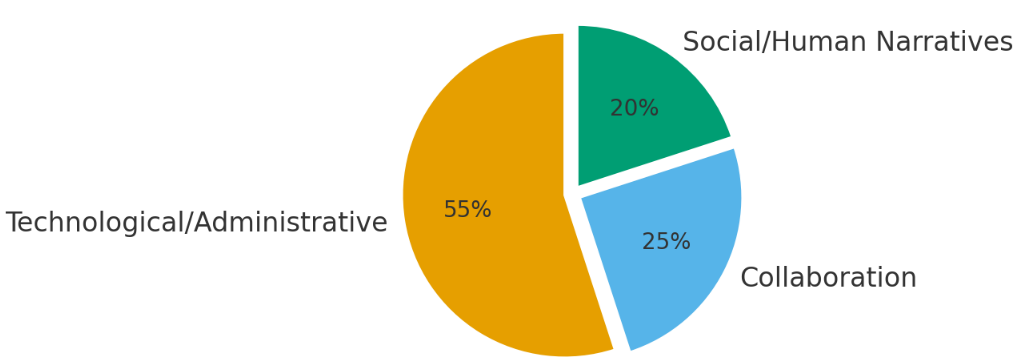
The dominance of technical and administrative records underscores Indonesia’s historical emphasis on nation-building through science and technology infrastructures [Larkin, 2013]. This orientation ensures accountability, enables policy verification, and provides evidence of progress. However, while the technical detail is commendable, it also reduces accessibility for non-specialist audiences.
4.2 Evidence of collaboration and capacity building
Collaboration emerged as a consistent theme across several collections. The LAPAN-TUBSAT satellite project documented Indonesia’s first micro-satellite developed in collaboration with Technische Universität Berlin, highlighting international cooperation and technology transfer. Similarly, the Kartini Nuclear Reactor archives reveal partnerships between BATAN and international consultants, showcasing early examples of cross-border scientific exchange. The patterns of collaboration across KHARINA’s collections are summarised in Table 2.
|
Collection | Collaboration type |
Partners |
Outcomes |
|
LAPAN-TUBSAT | International |
TU Berlin, Antrix Corporation |
Development of first Indonesian micro-satellite, capacity building |
|
Kartini Nuclear Reactor | International |
BATAN, foreign consultants |
Construction of nuclear research infrastructure, technology transfer |
|
N219 Aircraft | Domestic |
BRIN, aerospace vendors |
Development of indigenous aircraft, industry-research integration |
|
SKEA | Domestic |
Local governments, universities |
Rural electrification pilots, renewable energy development |
On the domestic front, the N219 aircraft project reflected the integration of multiple Indonesian stakeholders, including BRIN’s research units, aerospace vendors, and policy institutions. The SKEA archives further demonstrated collaboration between local governments, universities, and research institutions to explore renewable energy solutions in rural areas.
These examples demonstrate that KHARINA successfully captures Indonesia’s dual strategy: leveraging international partnerships for advanced technological capacity while fostering domestic collaborations for applied research. Such documentation illustrates the value of archives as records of both knowledge production and institutional cooperation.
4.3 Underrepresentation of social and human narratives
Despite the breadth of technical and administrative documentation, KHARINA’s collections reveal limited representation of social and human-interest narratives. For example, while the SKEA archives recorded the design and testing of wind energy systems, they lacked testimonies from rural communities that were intended to benefit from electrification projects. Similarly, the BRIN and DEPANRI collections emphasised policy decisions but offered little evidence of how these policies were received or experienced by society.
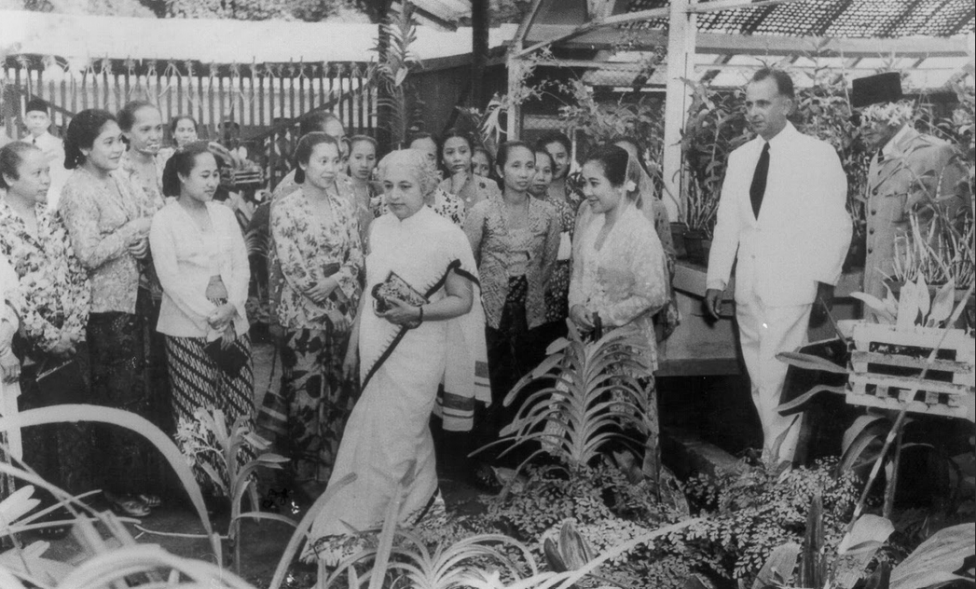
The Bogor Botanical Gardens photo archives of Nehru and Soekarno in 1950 stood out as an exception, representing a moment of science diplomacy through visual documentation. These images conveyed symbolic meanings of solidarity, identity, and cultural dialogue, suggesting the broader potential of archives in representing human dimensions of science.
Overall, the KHARINA Exhibition demonstrates the strengths of archival exhibitions in documenting scientific milestones and institutional reforms while also highlighting significant inclusivity gaps. For practitioners of science communication, these results suggest the importance of balancing technical and policy records with narratives that resonate with broader audiences. The following discussion reflects on these findings in relation to international practices and draws lessons for designing more inclusive and participatory archival exhibitions.
5 Discussion
The findings from the KHARINA Exhibition demonstrate both strengths and limitations in Indonesia’s archival documentation of research and innovation. This section expands upon these results by linking them to international scholarship and outlining lessons for science communication and archival practice.
5.1 Technological-administrative orientation
The first theme — the dominance of technological and administrative documentation — reflects Indonesia’s historical emphasis on nation-building through science and technology.
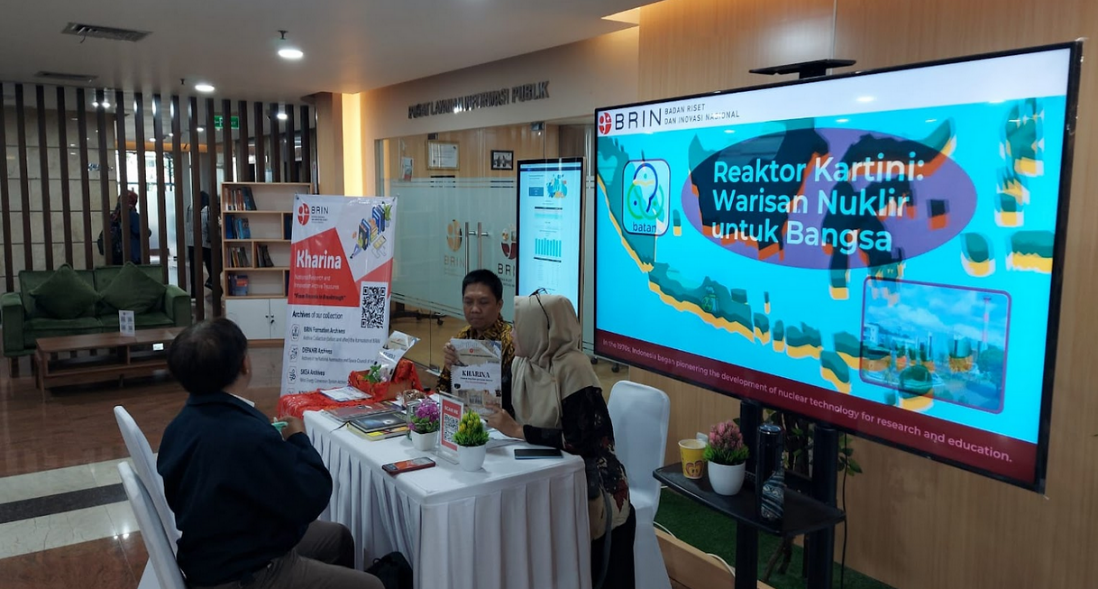
Collections such as the N219 aircraft, LAPAN-TUBSAT, and the Kartini Nuclear Reactor highlight a technocratic orientation in research documentation. This aligns with Grodal et al. [2021], who note that archives in developing countries often emphasize institutional legitimacy and technical progress. While this approach ensures accountability and preserves milestones, it also reduces accessibility for non-specialist audiences. From a science communication perspective, this finding suggests that highly technical archival narratives may require additional interpretive layers to support broader public understanding. For practitioners, this underscores the importance of balancing detailed technical records with narratives that can be more easily understood by the wider public. Figure 2 illustrates how KHARINA combines archival documents, printed catalogue, and video displays to communicate Indonesia’s research and innovation history to public audiences.
5.2 Collaboration and capacity building
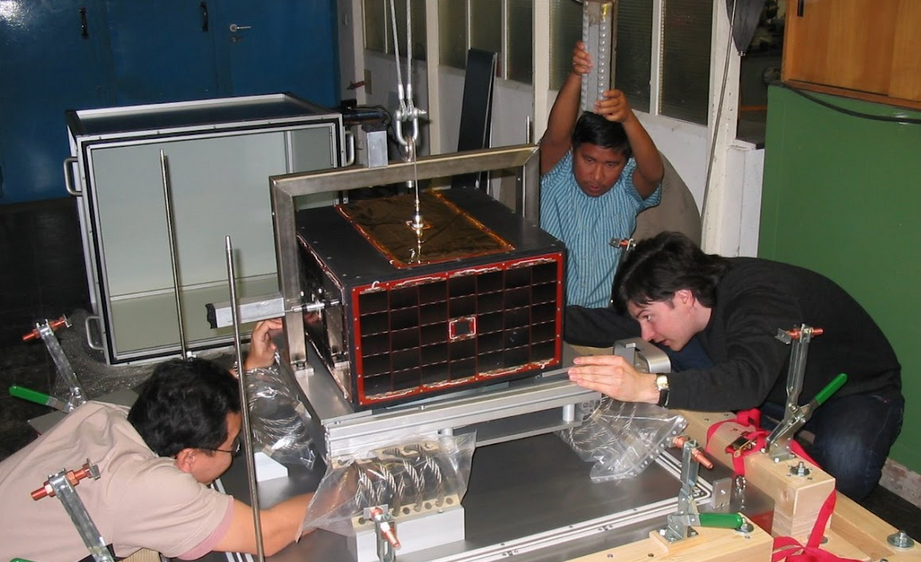
The second theme emphasizes collaboration as a defining feature of Indonesia’s scientific strategy. International partnerships, such as the LAPAN-TUBSAT project with TU Berlin, illustrate learning-by-doing and technological leapfrogging [Hill, 1990]. Figure 3 provides visual evidence of the assembly and testing stage of the LAPAN-TUBSAT microsatellite programme.
Domestic collaborations, exemplified by the N219 aircraft and SKEA projects, reveal how local governments, universities, and industry actors worked together to address national needs. These cases show that KHARINA not only records achievements but also documents networks of cooperation. By making collaborative processes visible, archival exhibitions can communicate science as a collective and socially embedded endeavor. The lesson here is that exhibitions can highlight collaboration as a form of capacity building, making science more relatable as a collective rather than purely institutional endeavor.
5.3 Underrepresentation of social narratives
The third theme — the underrepresentation of social and human-interest narratives — represents the most critical gap. While KHARINA captures technical progress and institutional reforms, it rarely includes testimonies from communities or end-users. International scholarship stresses that participatory archiving and inclusive documentation are essential for building trust in science [Kato-Nitta et al., 2018; König et al., 2025; Chtena et al., 2025; Kwiecien et al., 2025].
Compared with institutions such as the Smithsonian or the Science Museum in London, KHARINA privileges institutional voices over societal ones. Studies on museum and archival exhibitions emphasise that participatory approaches and narrative framing are central to enhancing public engagement and inclusivity, particularly in science-related exhibitions [Macdonald, 2006; Simon, 2010]. This comparison is intended to illustrate differing curatorial emphases rather than to position KHARINA as deficient, recognising variations in institutional mandates, resources, and historical contexts. The practical lesson is clear: future exhibitions should integrate oral histories, community perspectives, and user experiences to enhance inclusivity and public engagement.
5.4 Comparative perspective and science diplomacy
This subsection adopts a comparative perspective to situate KHARINA within broader international practices in archival exhibitions and science communication. Rather than benchmarking performance, the comparison highlights differences in curatorial emphasis and documentation priorities.
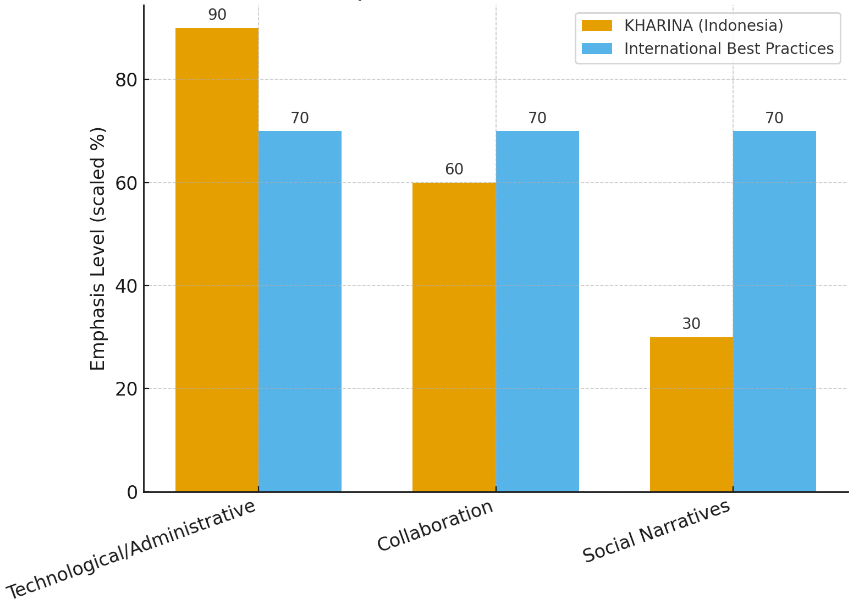
KHARINA demonstrates a strong emphasis on technical and administrative records, moderate attention to collaboration, and limited representation of social narratives (see Figure 4). International models demonstrate the value of balanced documentation. The Shanghai Municipal Archives, for example, uses exhibitions for cultural diplomacy and civic education [Zhu, 2014], while the Smithsonian incorporates personal stories and interactive displays to make science more engaging. These examples are cited to illustrate alternative curatorial strategies rather than to establish normative standards. KHARINA can adopt similar strategies to enrich its narrative.
Beyond communication, KHARINA also contributes to science diplomacy. The Bogor Botanical Gardens photographs of Nehru and Soekarno highlight the symbolic role of archives in representing national identity and fostering international solidarity. As shown in Figure 5, these images demonstrate how archival records can function as diplomatic symbols and shape collective memory and historical interpretation [Wang, 2024]. This reflects Elshakry’s [2013] concept of science as soft power, where archival records serve diplomatic as well as educational purposes.
5.5 Theoretical and practical contributions
Theoretically, this study extends archival scholarship by framing exhibitions as multidimensional instruments that integrate technical, policy, and social narratives. It emphasizes their communicative and diplomatic functions rather than viewing them solely as repositories. In doing so, the article contributes to practice-oriented debates in archival studies and science communication.
Practically, the study offers policy-relevant insights for BRIN and other stakeholders. Lessons from KHARINA include the need to incorporate community perspectives, adopt participatory archiving methods, and align exhibition narratives with international best practices. These strategies would enhance inclusivity, improve public engagement, and strengthen the legitimacy of science communication in Indonesia.
5.6 Lessons learned
In summary, KHARINA provides a robust record of Indonesia’s technological and institutional achievements but remains technocratic in orientation. The case highlights three key lessons: (1) detailed technical documentation ensures accountability but must be complemented with accessible narratives; (2) collaboration is not only a historical fact but also a powerful story to communicate; and (3) inclusivity requires intentional integration of social and community perspectives. Taken together, these lessons underline the role of archival exhibitions as strategic instruments of science communication and cultural diplomacy. By adopting these lessons, archival exhibitions in Indonesia and beyond can evolve into more effective tools for science communication, public engagement, and cultural diplomacy.
6 Conclusion
This article presented a practice insight into the KHARINA Exhibition as a case study of how Indonesia documents and communicates its research and innovation history. The analysis of seven curated collections identified three dominant patterns: a strong emphasis on technological and administrative documentation, substantial evidence of collaboration, and limited representation of social and human-interest narratives.
KHARINA’s strengths lie in its detailed records of technological milestones, institutional reforms, and collaborative projects. These dimensions confirm its value as both a repository of national memory and a reflection of strategic priorities. At the same time, the underrepresentation of social perspectives reveals a critical limitation: the exhibition risks privileging a technocratic narrative that reduces accessibility and engagement for wider audiences.
Three practical lessons emerge from this case. First, technical documentation should be complemented with accessible narratives that non-specialists can relate to. Second, exhibitions can highlight collaboration not only as evidence of scientific achievement but also as a story of collective capacity building. Third, inclusive approaches — such as oral histories and participatory archiving — are essential for fostering trust, cultural dialogue, and science diplomacy.
In sum, KHARINA demonstrates that archival exhibitions can serve as more than preservation tools: they can act as active instruments of science communication and cultural diplomacy. By balancing technical achievements with human narratives, future exhibitions in Indonesia and beyond can evolve into more inclusive platforms that strengthen public engagement and shape collective memory.
References
-
Allyn, N., Aubitz, S., & Stern, G. (1987). Using archival materials effectively in museum exhibitions. The American Archivist, 50(3), 402–404. https://doi.org/10.17723/aarc.50.3.g5203123461g2208
-
Braun, V., & Clarke, V. (2021). One size fits all? What counts as quality practice in (reflexive) thematic analysis? Qualitative Research in Psychology, 18(3), 328–352. https://doi.org/10.1080/14780887.2020.1769238
-
Cassol, H., Pétré, B., Degrange, S., Martial, C., Charland-Verville, V., Lallier, F., Bragard, I., Guillaume, M., & Laureys, S. (2018). Qualitative thematic analysis of the phenomenology of near-death experiences. PLoS ONE, 13(2), e0193001. https://doi.org/10.1371/journal.pone.0193001
-
Chaminade, C., & Lundvall, B.-Å. (2019). Science, technology, and innovation policy: old patterns and new challenges. In D. D. Bergh (Ed.), Oxford research encyclopedia of business and management. Oxford University Press. https://doi.org/10.1093/acrefore/9780190224851.013.179
-
Chtena, N., Alperin, J. P., Morales, E., Fleerackers, A., Dorsch, I., Pinfield, S., & Simard, M.-A. (2025). Towards an inclusive Open Science: examining EDI and public participation in policy documents across Europe and the Americas. Royal Society Open Science, 12(4), 240857. https://doi.org/10.1098/rsos.240857
-
Cook, T. (2013). Evidence, memory, identity, and community: four shifting archival paradigms. Archival Science, 13(2–3), 95–120. https://doi.org/10.1007/s10502-012-9180-7
-
Duff, W. M., Flinn, A., Suurtamm, K. E., & Wallace, D. A. (2013). Social justice impact of archives: a preliminary investigation. Archival Science, 13(4), 317–348. https://doi.org/10.1007/s10502-012-9198-x
-
Elshakry, M. (2013). Reading Darwin in Arabic, 1860–1950. The University of Chicago Press.
-
Grodal, S., Krabbe, A. D., Bingham, C. B., Tripsas, M., & Zietsma, C. E. (2021). Qualitative research with archival data. Academy of Management Proceedings, 2021(1), 16407. https://doi.org/10.5465/ambpp.2021.16407symposium
-
Hill, H. (1990). Indonesia’s industrial transformation: part I. Bulletin of Indonesian Economic Studies, 26(2), 79–120. https://doi.org/10.1080/00074919012331335805
-
Kato-Nitta, N., Maeda, T., Iwahashi, K., & Tachikawa, M. (2018). Understanding the public, the visitors, and the participants in science communication activities. Public Understanding of Science, 27(7), 857–875. https://doi.org/10.1177/0963662517723258
-
König, L. M., Altenmüller, M. S., Fick, J., Crusius, J., Genschow, O., & Sauerland, M. (2025). How to communicate science to the public? Recommendations for effective written communication derived from a systematic review. Zeitschrift für Psychologie, 233(1), 40–51. https://doi.org/10.1027/2151-2604/a000572
-
Kuckartz, U. (2019). Qualitative text analysis: a systematic approach. In G. Kaiser & N. Presmeg (Eds.), Compendium for early career researchers in mathematics education (pp. 181–197). Springer. https://doi.org/10.1007/978-3-030-15636-7_8
-
Kwiecien, K., Chansanam, W., & Tuamsuk, K. (2025). Digital cultural heritage in Southeast Asia: knowledge structures and resources in GLAM institutions. Informatics, 12(3), 96. https://doi.org/10.3390/informatics12030096
-
Larkin, B. (2013). The politics and poetics of infrastructure. Annual Review of Anthropology, 42(1), 327–343. https://doi.org/10.1146/annurev-anthro-092412-155522
-
Leshner, A. I. (2012). Capably communicating science. Science, 337(6096), 777. https://doi.org/10.1126/science.1227898
-
Macdonald, S. (Ed.). (2006). A companion to museum studies. Blackwell Publishing. https://doi.org/10.1002/9780470996836
-
Puppis, M. (2019). Analyzing talk and text I: qualitative content analysis. In H. Van den Bulck, M. Puppis, K. Donders & L. Van Audenhove (Eds.), The Palgrave handbook of methods for media policy research (pp. 367–384). Palgrave Macmillan. https://doi.org/10.1007/978-3-030-16065-4_21
-
Rad, A. M. (2014). Qualitative content analysis in research tradition: nature, stages and validity of the results. Quarterly of Educational Measurement, 4(14), 187–222. https://jem.atu.ac.ir/article_92.html
-
Rees Koerner, E., & Ackrell, L. (2025). Making museum research more visible: Open Access in the GLAM sector. Science Museum Group Journal, 23. https://doi.org/10.15180/252304
-
Simon, N. (2010). The participatory museum. Museum 2.0.
-
Wang, C. (2024). Fabulating archival arts: an exploration of the complexities of politics, history, and memory in a postmodern context. Transactions on Social Science, Education and Humanities Research, 7, 241–249. https://doi.org/10.62051/7nsbs810
-
Xudaybergenov, A. (2024). Ilmiy tadqiqot va innovatsiya: zamonaviy jamiyat taraqqiyotidagi o‘rni. Tamaddun Nuri Jurnali, 12(63), 381–389. https://doi.org/10.69691/17sbev61
-
Zhu, J. (2014). Archival exhibitions: cross-border cultural exchange and collaboration. Comma, 2014(1–2), 179–184. https://doi.org/10.3828/comma.2014.15
About the author
Dwi Ridho Aulianto is an archivist at the National Research and Innovation Agency (BRIN), Indonesia. His professional work focuses on archival management, documentation of research and innovation, and the development of digital archival systems. His interests include archival exhibitions as tools of science communication, open access to cultural heritage, and the role of archives in science diplomacy.
E-mail: dwir007@brin.go.id