
1 Introduction
For research to generate meaningful impact, it must connect with the ways participants and communities engage and communicate. Increasingly, these interactions take place on digital platforms, with social media now central to everyday exchanges. This rise of visual culture has driven the adoption of innovative and engaging formats in science communication [Rodríguez Estrada & Davis, 2015]. Among these, audiovisual methods, particularly digital storytelling, have shown promise for reaching broad and diverse audiences [Scott, 2015]. Digital stories are compact, narrative-driven audiovisual outputs that can translate key findings and messages into accessible, shareable formats that align with contemporary communication practices.
In the EU Horizon 2020 project DESIRA (“Digitalisation: Economic and Social Impacts in Rural Areas”), researchers collaborated with Living Labs (LLs) in 20 European regions to co-create digital stories with participants. The goal was to work with LL participants (members of the public from each region with an interest in the research themes) to co-create digital stories which would share co-produced research findings from the LL activities. This paper presents insights from an online survey of the researchers, highlighting how they developed digital storytelling skills, the challenges they faced, and the approach’s potential effectiveness. The findings offer valuable lessons for researchers without prior experience in digital storytelling, addressing a gap in the literature, which remains limited in exploring the skills needed for impactful multimedia communication.
This paper is structured around two objectives: 1) to determine the main challenges the researchers encountered when developing digital stories, and the ways that they overcame these challenges; 2) to consider the researchers’ perspectives on the effectiveness of digital stories in science communication. These objectives frame how the results are presented and discussed.
2 Digital storytelling as a method for science communication
2.1 Digital stories as a science communication method
Digital stories are a short form of digital media output, used to communicate a narrative. They were originally developed for engaging community members in artistic practice [McLellan, 2007]. Digital storytelling was later adopted in higher education settings, and finally by researchers as a tool for co-productive research and dissemination. It is now practiced in many settings including in teaching, research, the arts, and community engagement and is used widely across research fields, for example in disaster research [Mpofu-Mketwa et al., 2023], healthcare [Rieger et al., 2018] and environmental science [Cisneros et al., 2023].
Digital storytelling uses multimedia tools to bring stories to life, combining audio (voice, music, sounds), video, and images (photos, illustrations, maps) into a video-based output, usually 2–5 minutes long [Hung, 2019]. As both a research method and a communication practice, digital storytelling engages researchers and participants, allowing individuals to share personal stories. This approach is particularly useful in research that aims to capture diverse perspectives across different contexts. Digital stories that effectively reach broad audiences with research findings are compelling and accessible [Davey & Benjaminsen, 2021].
Authenticity and relatability, often associated with citizen-produced content, are key strengths of digital storytelling [Burgess, 2006]. These attributes resonate with contemporary audiences accustomed to social media platforms like TikTok, where user-generated content is often more relatable than professional productions [Shishko, 2022]. By emphasizing these qualities, digital storytelling can bridge the gap between professional production standards and participatory storytelling principles, creating outputs that are engaging and impactful [Dahlstrom, 2014].
Digital storytelling shares similarities with participatory video, but these communication practices differ in objectives, processes, and outcomes. Participatory video involves collaborative production with community members to empower marginalized groups [Shaw & Robertson, 2008]. Digital storytelling focuses on creating multimedia narratives with personal anecdotes, images, and audio/video, allowing individuals or communities to express personal stories and reflections [Lambert, 2013]. Both methods effectively build community and advocate for positive change [Chan & Sage, 2021].
Digital storytelling is not yet widely used for science communication. However, substantial research across a range of fields including disaster studies, healthcare, environmental science, and education demonstrates its value as a method for highlighting diverse perspectives, disrupting dominant narratives, and engaging those who are not domain or research specialists in complex issues. In educational contexts for instance, digital storytelling has been shown to improve literacy, critical thinking, language acquisition, and student engagement by encouraging learners to construct meaning through personal narrative [Robin, 2016; Chang & Chu, 2022].
In disaster research, digital storytelling has been used to improve risk awareness, preparedness, and community resilience by enabling communities to articulate experiences and responses in their own voices. Recent work in culturally and linguistically diverse communities shows that community-produced stories can support more inclusive emergency communication by challenging institutional narratives and foregrounding cultural knowledge and lived experience [Hou et al., 2025]. This capacity to privilege narratives that resonate with specific communities is important for science communication efforts that aim to reach diverse audiences, build trust, communicate uncertainty, or address unequal vulnerabilities.
Healthcare research provides further evidence of the method’s effectiveness. Systematic reviews of research on digital storytelling in healthcare show that patient narratives can enhance empathy, support shared decision-making, and communicate complex health experiences in accessible ways [Moreau et al., 2018; Park et al., 2021]. On the other hand, concerns have been raised regarding the accuracy of information shared via digital stories, as well as the impact of such outputs on putting scientific knowledge into practice [Park et al., 2021]. Overall, these studies emphasise how narrative co-creation can mediate between expert and experiential knowledge — an issue relevant to contemporary science communication challenges, particularly where public experiences or values intersect with scientific evidence.
Positioning digital storytelling within the broader landscape of research dissemination further highlights its potential contribution. Traditional research dissemination approaches such as academic publications, policy briefs, public lectures, infographics, and social-media communication often prioritise information delivery over lived experience and can struggle to engage members of the public meaningfully with complex or value-laden issues. These methods tend to be text-based and expert-driven, which can limit accessibility for individuals with limited time, literacy, or confidence in scientific institutions. While digitalisation and visual media have expanded the range of tools available, many current practices still lack mechanisms for co-creation, emotional resonance, and narrative voice — factors known to influence trust, engagement, and behaviour. Digital storytelling provides a participatory, narrative-based approach that emphasises lived experience, supports plural ways of knowing, and enhances the accessibility and relatability of research [Dahlstrom, 2014; Sundin et al., 2018].
Taken together, these insights provide a strong rationale for adopting digital storytelling for science communication. Existing research demonstrates that whilst some concerns exist over the accuracy of information shared, digital stories can communicate context-rich knowledge, broaden participation, challenge power imbalances in whose stories are heard, and make complex information more relatable. The approach therefore offers an accessible, engaging, and ethically grounded method for sharing scientific findings with diverse publics. While traditional scientific outputs such as journal articles remain essential, digital storytelling offers a complementary channel capable of reaching broader audiences and supporting more inclusive knowledge exchange [Lal et al., 2015; Balaman, 2018; de Jager et al., 2017; Rieger et al., 2018].
2.2 A shift in the researcher’s role
Building strong impact for research findings is increasingly important, especially for publicly funded research [Studenic & Ospelt, 2020]. The open science agenda emphasises making research transparent and accessible to diverse audiences for broader benefits [Vicente-Saez & Martinez-Fuentes, 2018]. This aligns with growing public interest in scientific knowledge [Gong, 2022]. Impact can be achieved through mechanisms like participatory research, citizen science, and effective dissemination [Knight & Mitchell, 2023]. While traditional dissemination often focuses on academics and the policy-science interface, open science promotes a more transparent and accessible approach. Communicating science to society not only enhances research impact but also increases public support for funding [ElShafie, 2018].
Effective open communication can be achieved in several ways, including open access publications (a requirement for funding programmes such as Horizon Europe), and research communication in engaging formats [Copiello, 2020]. The exponential growth of social media platforms has made them increasingly prominent channels for disseminating news of scientific discoveries and other research outputs [Mueller-Herbst et al., 2020].
While the shift in researchers’ roles has been ongoing for years, many researchers still struggle with public engagement due to limited institutional support. Researchers are traditionally trained to generate new knowledge, but now must also communicate findings across multimedia channels, requiring skills in areas like data science [Burgelman et al., 2019], multimedia production [MacKenzie, 2019], video content creation [Copiello, 2020], and infographic design [Parveen & Husain, 2021]. Unsurprisingly, researchers typically spend more time on the research itself than on developing their communication skills [Ponzio et al., 2018]; establishing an effective communication presence on social media platforms and navigating changing platform rules, along with GDPR compliance, poses further challenges. Yet, researchers with strong social media followings tend to have the greatest public reach.
Digital storytelling is a relatively new research and communication method for many researchers [Bhabra & Sparks, 2022], with time constraints further hindering their successful adoption and implementation [Banzato, 2014]. The literature on researchers adoption and use of these new communication methods is limited. This paper explores how well researchers are equipped to adopt digital storytelling for science communication, highlighting the challenges they face and how they develop the necessary skills. Section 3 outlines the methodology, covering both the digital storytelling process in the DESIRA project and the data collection method for this study. Section 4 presents the results and discussion, and Section 5 offers concluding remarks.
3 Methodology
In the Horizon 2020 DESIRA project, Living Labs1 (LL) were developed in 20 European regions, committed to co-creating knowledge on digitalisation in either agricultural, forestry or broader rural development settings. Workshops were held in each LL to co-produce future scenarios of digitalisation in the different LL contexts (set ten years into the future). Digital stories were developed to bring to life the findings and narratives co-produced with LL members in the workshops. The aim was to give voice to the LL participants, and use the stories to achieve a broad impact, communicating the research outputs to diverse audiences and ensuring a wide reach.
Digital stories covered diverse topics relating to rural digitalisation. Many of these communicated the future scenarios co-produced in the LLs, representing the hopes and fears of each LL community. Examples include a story where digital technologies had led to bleak futures for rural communities in Germany; a story where the use of technology had increased food security in a self-sufficient farming community in the Netherlands; and a story where increasing digitalisation had led to crises in forestry settings in Italy.
3.1 Digital storytelling
3.1.1 Digital story creation process
The original plan was to conduct face-to-face training sessions with researchers in each LL, leading to “practice run” digital story outputs. These sessions were meant to build skills and confidence so researchers could guide participants through the digital story creation process. However, COVID-19 travel restrictions forced a shift to online training. In December 2021, DESIRA researchers received online training, with the session recording and materials then made available online. The training team also provided one-on-one online support for researchers leading digital storytelling activities, addressing the fact that many had no prior experience with digital storytelling.
The process of creating a digital story. Digital storytelling involves several steps as shown in Figure 1.
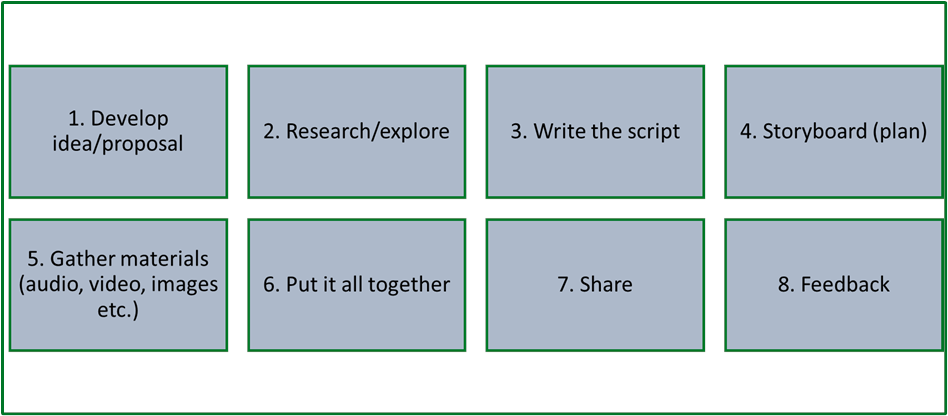
Researchers used either a PC, laptop, or tablet device. They also used a range of software and had access to WeVideo,2 a tool used for editing video which is popular amongst those developing digital stories.
3.1.2 Taking a collaborative approach
Researchers were encouraged to develop digital stories with participants in ways that were as participatory as possible, while retaining the flexibility to accommodate diverse local contexts across LLs. Participation most consistently occurred during the early phases of the process, particularly through workshops in which LL participants co-produced future scenarios of rural digitalisation. These collectively developed narratives formed the conceptual and thematic basis for many of the digital stories.
Subsequent stages of the digital storytelling process, including scripting, selection of images and video, recording of narration, and editing, were typically facilitated by the researchers and in many cases led by them. Participant involvement at these stages varied across LLs and ranged from active collaboration (e.g., narrating scripts, contributing photographs or video footage, and commenting on drafts) to more consultative forms of participation. This variation reflected differences in local capacities, time availability, digital skills, skills and attitudes of researchers in involving LL participants, and the constraints imposed by COVID-19-related restrictions.
In some LLs, participants were invited to take photographs or record video footage of relevant places, practices, or artefacts, or to contribute materials from personal archives. In other cases, participant involvement was limited to providing narrative input or feedback, with researchers taking primary responsibility for assembling and editing the final digital stories. As such, the process cannot be characterised as uniformly co-productive across all LLs, but rather as a form of researcher-supported participatory digital storytelling.
All final digital stories were shared with LL participants for feedback prior to dissemination. While this did not always result in substantive changes to the final outputs, it constituted an intentional moment of validation and accountability within the process. This approach aligns with participatory video and digital storytelling traditions that emphasise facilitation, reflexivity, and negotiated authorship, particularly within large, multi-site research projects [Shaw & Robertson, 2008; Burgess, 2006; Lambert, 2013; de Jager et al., 2017].
3.1.3 The outputs
The DESIRA project delivered 81 digital stories; each of 20 LLs produced 4 (or in one case 5) digital stories related to the research. Researchers were asked to produce stories with a voiceover in the LL’s national language, with subtitles in English language for non-English outputs.
3.2 Method used to capture data about the process
This practice insight presents findings from a survey carried out with researchers involved in the digital storytelling activities to capture their experiences in developing the digital stories. The survey had 19 questions, most allowing both closed and open qualitative responses. The 19 questions sought information on: personal experiences including challenges and skills development; the development process; the outputs and the final version of the digital stories. Table 1 presents the survey questions grouped by thematic areas (for the full Survey, see Appendix A).
|
Personal experience of digital storytelling |
|
| 1 |
How familiar were you with digital storytelling when you began the process of creating digital stories for the DESIRA project? |
| 2 |
Any additional comments to the previous question? (Please, detail your previous response) |
| 3 |
What was the most difficult part of the process? |
| 4 |
Any other difficulties? (Please, detail your previous response) |
| 5 |
Which are the main obstacles you found (please select all that apply)? |
| 6 |
Any other obstacles? (Please, detail your previous response) |
| 13 |
Do you feel that the effort that this task required would be worthy for the final results of the project? |
| 15 |
How has your skillset grown in terms of communicating science after making these videos? |
| 17 |
Would you create digital stories again to disseminate your research results? |
|
The digital storytelling process |
|
| 10 |
Did you use professional videomakers? |
| 11 |
If you answered YES, did you find difficulties to match the expertise of experts in visual communication and researchers? |
| 12 |
To what extent and how did you involve Living Lab participants in the making of your digital stories? Please explain in detail |
| 19 |
How long did it take to develop each digital story? (Please, explain your response in detail): |
|
The outputs |
|
| 7 |
What type of digital stories did you develop (please tick all that apply): |
| 8 |
Any other type? (Please, briefly explain your answer) |
| 9 |
Why did you decide on this type of story/stories? |
| 12 |
How useful do you think these videos will be in engaging non-scientists in your research? |
| 16 |
Which type of audience is your digital story aimed at? |
The survey was created in Microsoft Office “Forms” and an online link was created. Despite the survey being online, most researchers completed the survey during the final DESIRA consortium meeting (January 2023). Those who were not in attendance completed the survey online in the two weeks following the meeting. The survey was completed between January and June 2023 by 27 researchers, from academic institutions in the UK, Spain, the Netherlands, Italy, Germany, Poland, Croatia, Belgium, Finland, Latvia, Greece, Switzerland, Hungary and Austria. The link for the survey was shared with the lead researcher responsible for each of the LLs — they were then free to share this link with other researchers in their team. As such, we do not have an accurate response rate, though we did receive responses from at least one researcher per LL.
Nearly half respondents were aged 25–40 years (12 respondents); one quarter were 40–55 years (7 respondents); 8 respondents were over 55 years. A slight majority of respondents were male (16 respondents).
Although the survey collected both quantitative and qualitative data, this paper draws largely on the qualitative data collected, although some descriptive statistics are also presented. This is in part due to the small sample size that would not support more sophisticated quantitative analysis of the results. The qualitative data were extracted from the survey data and analysed using a qualitative thematic analysis approach [Vaismoradi et al., 2013]. The analysis was both deductive and inductive, since certain themes were expected due to the survey design. Themes identified included: digital skills, challenges with digital storytelling, role of researchers and research audiences. The data was analysed by two researchers with the support of NVivo qualitative analysis software, which helped the researchers to organise the data by themes and compare across themes and respondents. Findings are presented in the next section (Section 4).
4 Results and discussion
In this section, survey findings are presented in two sub-sections representing the two research objectives. Within each section, various emergent themes are presented and discussed.
4.1 What are the main challenges for researchers in developing digital stories, and how are these challenges overcome?
Challenges with digital storytelling. In the survey, we asked the researchers which part of the digital storytelling process they found most difficult. The majority responded that the most difficult aspect was in relation to constructing a narrative (11 respondents), writing a script (10 respondents), and editing the digital story (9 respondents).
One researcher reported challenges in relation to “identifying the relevant topic” and: “finding the balance between what we have data on and what might be interesting to people watching the video” (male researcher, Latvia). There was a sense that: “It was challenging to translate the fruitful discussion of the LL members into a concrete narrative of the digital story” (male researcher, Croatia).
This translation was considered necessary to transform insights into a compelling narrative structure and to achieve impact. This supports van der Meij et al. [2017] who argued that science-based video narratives require a clear topical focus to guide learning and reflection (and hence, impact).
Some found it time consuming to: “process thoroughly a good storyline from idea to final result” (male researcher, The Netherlands). Many struggled with the time required for skills development: “it is very time intensive to gain video editing skills” (female researcher, The Netherlands). Editing skills were also mentioned, including: “assuring a common minimum video and audio quality using frames from LL participants” (female researcher, Italy).
Skills therefore seem critical. On a multiple-choice item, 20 of the 27 researchers responded that their main challenge was “Lack of skills (video recording, video editing, script writing, background music addition, copyrights)”. Researchers felt they did not know the technology well, explaining that they “did not have the internal competencies” (female researcher, France). This strongly supports the need for a skillset which is not yet well developed amongst researchers, echoing Bhabra and Sparks [2022] who warn that researchers are not yet ready to effectively deliver these new forms of impact. However, researchers are often willing to embrace learning: “I was quite scared of doing this work, but I liked it a lot and I found it important that it was me doing it instead of an external communication expert” (female researcher, Italy).
This preoccupation with professional quality reflects a broader tension in digital storytelling between achieving polished outputs and staying true to its participatory ethos. Balancing these priorities is crucial to ensure that digital stories amplify participant voices while meeting minimum quality standards for engagement [de Jager et al., 2017]. In the DESIRA project many of the digital stories incorporated participant voices through prior scenario-planning workshops, where positive and negative future narratives were co-developed with Living Lab (LL) participants and later adapted into digital stories. For some LLs, participant involvement ended at this stage, while others extended participation into production itself: “after developing narratives and scripts together, two videos were exclusively produced by the LL participants — acting, filming, postproduction…” (male researcher, Germany).
Digital storytelling aims to foreground participant voice and personal narrative [Chan & Sage, 2021], and the process sought to encourage continued engagement throughout production. However, COVID-19 created challenges for face-to-face participation in some countries [Sedysheva, 2020], leading teams to adapt through outdoor meetings, remote collaboration, or by handing over creative control: “one of the four [digital stories] was developed directly by the communication expert of the public administration, with their materials” (female researcher, Italy). Others were more hesitant to involve participants: “we were hesitant to ‘bother’ Living Lab participants with this… involving them in this video seemed too much of a stretch” (female researcher, Belgium). These differing approaches resulted in considerable variation across the final outputs, including differences in language use, narrative voice, and visual style, reflecting the extent and nature of participant involvement in each LL. These differences in levels of participation could have led to consequences for the effectiveness of some of the digital stories in science communication, given the importance of outputs reflecting authentic narratives.
Skills development amongst the researchers. Some researchers actively increased their skills. One researcher explained: “it was a new concept for me but with the help of very good written material how to do it, it was clear for me” (male researcher, Croatia). For those researchers who actively engaged with the training and undertook the process themselves, skillsets were expanded, for example: “I think my skillset [has] grown as I had to think in a different way… that was an innovative tool that made me think in a different way about communicating science” (female researcher, Italy). Others instead outsourced some or all digital storytelling work: “I did not develop my skills that much as we outsourced the production of the videos” (male researcher, Belgium). One researcher explained that the challenges included “the financial part to pay for technical experts” (male researcher, Italy). Some researchers may have assumed that external experts were the ideal route, despite training emphasizing that researchers should handle the process themselves, ideally with input from their LL participants. Others sought support from colleagues for editing and other tasks: “we had the help of an experienced colleague-filmmaker who assisted in the process” (female researcher, Belgium). Drawing on the skills of experts was an alternative route to ensuring timely delivery — further, some researchers felt that this meant higher quality video outputs. The different interpretations as to the expected quality of the final digital stories is an important learning step, as we discuss in more depth in Section 4.2.
4.2 How effective are digital stories in science communication, according to the researchers involved?
Researchers indicated a broad range of target audiences for digital stories: practitioners, policy makers, citizens, farmers, farm advisors, students and educators, technology developers, rural residents and consumers. In the survey we asked respondents whether the digital stories they had produced were effective for communicating science. At the time of the survey, the digital stories had been in the public domain for only a matter of weeks, so it was too early to make evidence-based statements on their effectiveness. It is important to note that these findings reflect the perspectives of the researchers only, and do not reflect how audiences actually experienced or engaged with the digital stories (this would make a very interesting piece of research in its own right).
Some researchers were very new to this approach: “I probably would not have considered fictional stories as a means of communicating science before — but with the scenario approach as a basis for the videos it is a viable thing to do” (male researcher, Germany). For some, the experience was positive and valuable: “it was a valuable experience, and I would now have a better idea how to approach it in the future” (female researcher, Belgium). Others were less positive: “I am quite sceptical about any impact. I am sorry for that” (male researcher, Latvia).
The findings also suggest that this communication practice is only effective if the outputs are accessible to the chosen audiences: “I consider digital stories a useful tool but a channel to reach the target audience is needed. Sharing a YouTube link was not enough to reach all of them” (male researcher, Croatia). This is important, as it points to the efforts needed beyond simply sharing an output online, if it is to reach the intended audiences.
Further, digital stories may be better suited to certain audiences: “(They are) useful videos for content dissemination at a broader level… [but they are] hardly accessible to the ordinary citizen” (female researcher, Italy).
More attention should also be paid to how outputs are shared post-publication. Otherwise, as one researcher noted, the results might not have the desired impact: “(They are) not very useful, indicated both by the amount of views the videos have gotten and because of the quality of the work produced” (male researcher, Belgium).
This view reflects a common perception amongst researchers, that the final video outputs should be of a high (even professional) standard: “overall the quality of these is poor to average, and thus not really useful in engaging non-scientists” (female researcher, Belgium).
This contrasts with the ethos of digital storytelling, which typically emphasizes the narrative and giving voice to participants over professional output standards [Burgess, 2006]. Measuring the ‘impact’ of digital stories is complex, as it extends beyond video views. A 3-minute visual story shared within participants’ communities could have effects that are difficult to measure. Impacts extend to what effects viewing the video might have on a potentially wide and diverse audience — these could be anything from raised awareness of a topic, to taking action in response to a message conveyed — all of which are very difficult to measure once an output is in the public domain.
5 Conclusions
Our work highlights the growing importance of audiovisual methods in science communication and research impact practices, and the new demands these communication practices place on researchers — demands that some may find challenging to meet. Many researchers in the DESIRA project were new to digital storytelling. Echoing Bhabra and Sparks [2022], many felt ill-equipped to engage with research participants, to develop the final outputs and to effectively disseminate the final outputs. Researchers faced challenges not only in mastering technological skills but also in (co)constructing compelling narratives [see also van der Meij et al., 2017]. The Covid-19 pandemic exacerbated these challenges. Nonetheless, our findings show that researchers are willing to learn new communication skills (and appreciate the value in these methods). Over time, these skills and methods are likely to become more widespread, particularly as younger researchers bring greater digital fluency and new perspectives to their work.
This practice insight describes how researchers co-create digital stories with members of the public who participate in research projects, an approach known as participatory science communication. Many researchers felt that not producing professional-quality videos was a limitation that might hinder the impact of their outputs, and in some cases this concern appeared to outweigh the importance of giving voice to participants. Yet the essence of digital storytelling lies less in polish and more in authenticity, power-sharing, and co-production of narratives. As Burgess [2006] observes, audiovisual content can elevate ordinary voices above commercial media, and citizen-produced work is increasingly respected alongside professional outputs. As smartphones and social platforms normalize amateur creativity [Shishko, 2022], audiences often prioritize clarity, steady visuals, and authentic storytelling over high production values, particularly in short-form video — a preference that may become increasingly important as AI content proliferates online. However, when research outputs are primarily researcher-driven, authenticity and relevance for participants and target audiences may be undermined, potentially reinforcing existing power imbalances. Our findings indicate that an emphasis on professional production quality sometimes amplified researcher voices over those of participants, underscoring the need for more structured and intentional participatory practices.
This challenge was heightened by the ambitious scale of the DESIRA project, where each of the 20 LLs was required to co-develop four digital stories alongside other research tasks, stretching both time and resources. Future projects should therefore prioritise authenticity, co-production, and manageable scope over the sheer volume of outputs. Importantly, projects should embed explicit points for participant input at multiple stages (e.g., co-developing scripts, reviewing edits, influencing narrative and technical decisions), with attention to participants facing barriers due to digital exclusion, language, confidence, or prior media experience. This can strengthen both the relevance and trustworthiness of outputs while ensuring marginalised voices are heard. At the same time, it is important to acknowledge structural constraints, such as digital divides that exclude some groups from participation or access, and to remain attentive to how issues of access and marginalisation shape whose stories are told and whose voices are heard.
Our researchers have mixed views on the effectiveness of digital storytelling in science communication. Audience is crucial and varies depending on the topic, impacting the choice of communication channels. Our researchers were concerned that producing compelling outputs is insufficient; how these outputs are shared, and with which audiences, is equally important. Ensuring that digital stories are disseminated through community-sharing practices, such as local events, social networks, or participant-led channels, can enhance authenticity, relevance, and engagement, particularly for groups who might be marginalised or digitally excluded. Another challenge is measuring impact; while views are often counted, we argue that effective impact goes beyond these metrics in ways which cannot easily be captured in evaluation or understood. This highlights the distinction between communication and engagement; whilst communication ensures that research outputs and their messages can reach audiences, engagement involves creating opportunities for dialogue, co-production, and mutual learning between researchers and publics — a relational and interactive process rather than one-way messaging. Moreover, community sharing practices, informal circulation, and locally meaningful uses of stories can enhance impact and reinforce the participatory ethos of digital storytelling.
We argue that a good (and achievable) starting point for many researchers, regarding producing effective and impactful audiovisual outputs such as digital stories, is to focus on:
- Ensuring co-creation at multiple stages, embedding participant decision-making in script development, content selection, and final editing to strengthen authenticity and equity.
- Accessing basic training in multimedia tools (as opposed to aiming for professional standards of filmmaking skills), ensuring researchers can record steady footage and clear audio [Hung, 2019].
- Leveraging everyday technologies: encouraging the use of smartphones and accessible editing tools [Davey & Benjaminsen, 2021].
- Collaborating with research participants on content, allowing them to co-create or narrate stories to enhance relatability, and being open to the possibility that research participants might possess stronger skills than some researchers [Lambert, 2013].
- Considering not only the production of digital outputs, but also how these are shared and with which audiences — supporting community sharing practices, and bearing in mind that there may be diverse audiences of relevance to a particular output, and that not all of these will access the same communication channels.
- Embedding practical strategies to mitigate barriers faced by marginalised or digitally excluded groups, including providing support for participation, language translation, and accessible technologies.
We anticipate that as science communication moves further towards multimedia formats to reach broader audiences, researchers will increasingly be expected to embrace video-based methods which require complex skillsets. Researchers require support to obtain these skills. This support is increasingly provided via training mechanisms, but training is not available in all research institutes. We propose that such skills development be prioritised by research institutes and funders where possible. Outsourcing work might be appropriate, so long as this does not detract from giving voice to participants and encouraging their input (indeed, in some cases it could be research participants themselves who possess the strongest skills in creating audio-visual content). Crucially, outsourcing should be managed in ways that preserve participant involvement and narrative co-creation, ensuring outputs remain authentic and relevant to intended audiences.
Research on digital storytelling as a science communication method remains limited, particularly regarding its practical application by researchers. This practice insight contributes a novel perspective to this emerging field and aims to foreground the growing importance of researcher training and skills for impact-oriented, multimedia communication.
Acknowledgments
DESIRA has received funding from the European Union’s Horizon 2020 Research and Innovation Programme under grant agreement No 818194.
A Survey text
Digital stories questionnaire
This is a questionnaire to collect the opinion about the creation of the digital stories and the
specific skills that are needed to create them.
By submitting a response to this form, I agree to the use of my data as set out in the Privacy Policy, available here: [anonymized web address, no longer active]
-
Please tick here to confirm that you consent to taking part in this questionnaire, that you
understand that your responses will be kept anonymous in any resulting outputs, and that
you are aware that you are free to withdraw your participation at any time (even after the
questionnaire has been submitted)
Yes
No - In order to keep a correct registration of responses, please write your name and the LL where you are working, even if the data of this questionnaire will be kept anonymous in any reports/papers
-
How familiar were you with digital storytelling when you began the process of creating digital
stories for the DESIRA project?
It was my first time developing digital stories
I’ve had some involvement with developing a digital story before, but didn’t lead the process
I’ve developed (or helped to develop) digital stories once or twice before
I have developed (or helped to develop) digital stories several times before
Other - Any additional comments to the previous question? (Please, detail your previous response)
-
What was the most difficult part of the process?
The narrative
The script
Filming
Editing
Adding extra resources (music, subtitles etc.)
Other response - Any other difficulties? (Please, detail your previous response)
-
Which are the main obstacles you found (please select all that apply)?
Lack of skills (video recording, video editing, script writing, background music addition, copyrights)
Lack of tools (filming device, videomaking software)
Need of experts to develop the work
Other - Any other obstacles? (Please, detail your previous response)
-
What type of digital stories did you develop (please tick all that apply):
A character explains the story
A voice recorded Powerpoint
An animated infographic
Silent film (or film with music but no voiceover) with subtitles
Other - Any other type? (Please, briefly explain your answer)
- Why did you decide on this type of story/stories?
-
Did you use professional videomakers?
Yes
No -
If you answered YES, did you find difficulties to match the expertise of experts in visual
communication and researchers?
Yes
No - To what extent and how did you involve Living Lab participants in the making of your digital stories? Please explain in detail (e.g. “included interview video of Living Lab participants in the digital story”; “Living Lab participants helped to choose audio and visual material for the story”; “it was not possible to involve Living Lab participants in the development of the stories because…” etc.).
- How useful do you think these videos will be in engaging non-scientists in your research?
-
Do you feel that the effort that this task is going to required would be worthy for the final
results of the project?
Yes
No - How has your skillset grown in terms of communicating science after making these videos?
- Which type of audience is your digital story aimed at?
-
Would you create digital stories again to disseminate your research results?
Yes
No - Please, detail your previous response:
- How long did it take to develop each digital story? (Please, explain your response in detail):
References
-
Arnautu, D., & Dagenais, C. (2021). Use and effectiveness of policy briefs as a knowledge transfer tool: a scoping review. Humanities and Social Sciences Communications, 8(1), 211. https://doi.org/10.1057/s41599-021-00885-9
-
Balaman, S. (2018). Digital storytelling: a multimodal narrative writing genre. Journal of Language and Linguistic Studies, 14(3), 202–212. https://www.jlls.org/index.php/jlls/article/view/996
-
Banzato, M. (2014). Digital storytelling and key skills: problems and opportunities. In D. Passey & A. Tatnall (Eds.), Key competencies in ICT and informatics: implications and issues for educational professionals and management. IFIP WG 3.4/3.7 International Conferences, KCICTP and ITEM 2014, Potsdam, Germany, July 1–4, 2014. Revised selected papers (pp. 233–246). Springer. https://doi.org/10.1007/978-3-662-45770-2_20
-
Bhabra, M., & Sparks, F. (2022). Exploring research impact; why it matters? Current Opinion in Otolaryngology & Head and Neck Surgery, 30(3), 188–193. https://doi.org/10.1097/moo.0000000000000801
-
Burgelman, J.-C., Pascu, C., Szkuta, K., Von Schomberg, R., Karalopoulos, A., Repanas, K., & Schouppe, M. (2019). Open science, open data, and open scholarship: European policies to make science fit for the twenty-first century. Frontiers in Big Data, 2, 43. https://doi.org/10.3389/fdata.2019.00043
-
Burgess, J. (2006). Hearing ordinary voices: cultural studies, vernacular creativity and digital storytelling. Continuum, 20(2), 201–214. https://doi.org/10.1080/10304310600641737
-
Chan, C., & Sage, M. (2021). A narrative review of digital storytelling for social work practice. Journal of Social Work Practice, 35(1), 63–77. https://doi.org/10.1080/02650533.2019.1692804
-
Chang, C.-Y., & Chu, H.-C. (2022). Mapping digital storytelling in interactive learning environments. Sustainability, 14(18), 11499. https://doi.org/10.3390/su141811499
-
Cisneros, L., Campbell, T., Freidenfelds, N., Lindemann, A., Elliot-Famularo, H., Chadwick, C., Dickson, D., & Park, B.-Y. (2023). Eco-digital storytelling: engaging historically excluded populations in environmental action through mentoring, geospatial technology, and digital media storytelling. Frontiers in Education, 7, 1083064. https://doi.org/10.3389/feduc.2022.1083064
-
Copiello, S. (2020). Digital multimedia tools, research impact, stated and revealed preferences: a rejoinder on the issue of video abstracts. Scientometrics, 123(1), 543–551. https://doi.org/10.1007/s11192-020-03370-3
-
Dahlstrom, M. F. (2014). Using narratives and storytelling to communicate science with nonexpert audiences. Proceedings of the National Academy of Sciences, 111(supplement_4), 13614–13620. https://doi.org/10.1073/pnas.1320645111
-
Davey, N. G., & Benjaminsen, G. (2021). Telling tales: digital storytelling as a tool for qualitative data interpretation and communication. International Journal of Qualitative Methods, 20. https://doi.org/10.1177/16094069211022529
-
de Jager, A., Fogarty, A., Tewson, A., Lenette, C., & Boydell, K. (2017). Digital storytelling in research: a systematic review. The Qualitative Report, 22(10), 2548–2582. https://doi.org/10.46743/2160-3715/2017.2970
-
De Vecchi, N., Kenny, A., Dickson-Swift, V., & Kidd, S. (2016). How digital storytelling is used in mental health: a scoping review. International Journal of Mental Health Nursing, 25(3), 183–193. https://doi.org/10.1111/inm.12206
-
ElShafie, S. J. (2018). Making science meaningful for broad audiences through stories. Integrative and Comparative Biology, 58(6), 1213–1223. https://doi.org/10.1093/icb/icy103
-
Finkler, W., & León, B. (2019). The power of storytelling and video: a visual rhetoric for science communication. JCOM, 18(05), A02. https://doi.org/10.22323/2.18050202
-
Gibson, B. E. (2005). Co-producing video diaries: the presence of the “absent” researcher. International Journal of Qualitative Methods, 4(4), 34–43. https://doi.org/10.1177/160940690500400403
-
Gong, K. (2022). Open science: the science paradigm of the new era. Cultures of Science, 5(1), 3–9. https://doi.org/10.1177/20966083221091867
-
Gubrium, A. (2009). Digital storytelling: an emergent method for health promotion research and practice. Health Promotion Practice, 10(2), 186–191. https://doi.org/10.1177/1524839909332600
-
Hou, J. Z., Hearn, G., & Osman, K. (2025). Culturally diverse storytelling for inclusive emergency communication: Insights from CALD communities. Journal of Marketing Communications, 31(5), 575–594. https://doi.org/10.1080/13527266.2024.2434048
-
Hung, S.-T. A. (2019). Creating digital stories: EFL learners’ engagement, cognitive and metacognitive skills. Educational Technology & Society, 22(2), 26–37. https://www.jstor.org/stable/26819615
-
Jia, H., Wang, D., Miao, W., & Zhu, H. (2017). Encountered but not engaged: examining the use of social media for science communication by Chinese scientists. Science Communication, 39(5), 646–672. https://doi.org/10.1177/1075547017735114
-
Johnston, K. A., & Lane, A. B. (2021). Communication with intent: a typology of communicative interaction in engagement. Public Relations Review, 47(1), 101925. https://doi.org/10.1016/j.pubrev.2020.101925
-
Knight, E., & Mitchell, V. (2023). The ‘how’ rather than the ‘what’ of research impact. Higher Education Research & Development, 42(2), 336–349. https://doi.org/10.1080/07294360.2022.2057452
-
Kontiza, K., Antoniou, A., Daif, A., Reboreda-Morillo, S., Bassani, M., González-Soutelo, S., Lykourentzou, I., Jones, C. E., Padfield, J., & López-Nores, M. (2020). On how technology-powered storytelling can contribute to cultural heritage sustainability across multiple venues — evidence from the CrossCult H2020 project. Sustainability, 12(4), 1666. https://doi.org/10.3390/su12041666
-
Kouper, I. (2010). Science blogs and public engagement with science: practices, challenges, and opportunities. JCOM, 09(01), A02. https://doi.org/10.22323/2.09010202
-
Lal, S., Donnelly, C., & Shin, J. (2015). Digital storytelling: an innovative tool for practice, education, and research. Occupational Therapy In Health Care, 29(1), 54–62. https://doi.org/10.3109/07380577.2014.958888
-
Lambert, J. (2013). Digital storytelling: capturing lives, creating community (4th ed.). Routledge. https://doi.org/10.4324/9780203102329
-
MacKenzie, L. E. (2019). Science podcasts: analysis of global production and output from 2004 to 2018. Royal Society Open Science, 6(1), 180932. https://doi.org/10.1098/rsos.180932
-
McLellan, H. (2007). Digital storytelling in higher education. Journal of Computing in Higher Education, 19(1), 65–79. https://doi.org/10.1007/bf03033420
-
Moreau, K. A., Eady, K., Sikora, L., & Horsley, T. (2018). Digital storytelling in health professions education: a systematic review. BMC Medical Education, 18, 208. https://doi.org/10.1186/s12909-018-1320-1
-
Mpofu-Mketwa, T. J., Abrams, A., & Black, G. F. (2023). Reflections on measuring the soundness of the digital storytelling method applied to three Cape Flats vulnerable communities affected by drought, fire and flooding in Cape Town. Social Sciences & Humanities Open, 7(1), 100407. https://doi.org/10.1016/j.ssaho.2023.100407
-
Mueller-Herbst, J. M., Xenos, M. A., Scheufele, D. A., & Brossard, D. (2020). Saw it on Facebook: the role of social media in facilitating science issue awareness. Social Media + Society, 6(2). https://doi.org/10.1177/2056305120930412
-
Park, E., Forhan, M., & Jones, C. A. (2021). The use of digital storytelling of patients’ stories as an approach to translating knowledge: a scoping review. Research Involvement and Engagement, 7(1), 58. https://doi.org/10.1186/s40900-021-00305-x
-
Parveen, A., & Husain, N. (2021). Infographics as a promising tool for teaching and learning. Journal of Emerging Technologies and Innovative Research, 8(8), c554–c559. https://www.jetir.org/view?paper=JETIR2108322
-
Ponzio, N. M., Alder, J., Nucci, M., Dannenfelser, D., Hilton, H., Linardopoulos, N., & Lutz, C. (2018). Learning science communication skills using improvisation, video recordings, and practice, practice, practice. Journal of Microbiology & Biology Education, 19(1). https://doi.org/10.1128/jmbe.v19i1.1433
-
Rieger, K. L., West, C. H., Kenny, A., Chooniedass, R., Demczuk, L., Mitchell, K. M., Chateau, J., & Scott, S. D. (2018). Digital storytelling as a method in health research: a systematic review protocol. Systematic Reviews, 7(1), 41. https://doi.org/10.1186/s13643-018-0704-y
-
Robin, B. R. (2016). The power of digital storytelling to support teaching and learning. Digital Education Review, 30, 17–29. https://revistes.ub.edu/index.php/der/article/view/16104
-
Rodríguez Estrada, F. C., & Davis, L. S. (2015). Improving visual communication of science through the incorporation of graphic design theories and practices into science communication. Science Communication, 37(1), 140–148. https://doi.org/10.1177/1075547014562914
-
Scott, G. (2015). Teaching and communicating science in a digital age. F1000Research, 4, 83. https://doi.org/10.12688/f1000research.6323.1
-
Sedysheva, A. (2020). Doing qualitative research during the Covid-19 pandemic of 2020. Ask: Research and Methods, 29(1), 75–88. https://doi.org/10.18061/ask.v29i1.0005
-
Shaw, J., & Robertson, C. (2008). Participatory video: a practical approach to using video creatively in group development work. Routledge. https://doi.org/10.4324/9780203133217
-
Shishko, B. (2022). Storytelling in the digital era: perspectives on age and gender. Trames, 26(4), 397–411. https://doi.org/10.3176/tr.2022.4.03
-
Smyrnaiou, Z., Georgakopoulou, E., & Sotiriou, S. (2020). Promoting a mixed-design model of scientific creativity through digital storytelling — the CCQ model for creativity. International Journal of STEM Education, 7(1), 25. https://doi.org/10.1186/s40594-020-00223-6
-
Studenic, P., & Ospelt, C. (2020). Do you tweet?: trailing the connection between Altmetric and research impact! RMD Open, 6(3), e001034. https://doi.org/10.1136/rmdopen-2019-001034
-
Sundin, A., Andersson, K., & Watt, R. (2018). Rethinking communication: integrating storytelling for increased stakeholder engagement in environmental evidence synthesis. Environmental Evidence, 7(1), 6. https://doi.org/10.1186/s13750-018-0116-4
-
Vaismoradi, M., Turunen, H., & Bondas, T. (2013). Content analysis and thematic analysis: implications for conducting a qualitative descriptive study. Nursing & Health Sciences, 15(3), 398–405. https://doi.org/10.1111/nhs.12048
-
van der Meij, M. G., Broerse, J. E. W., & Kupper, F. (2017). Supporting citizens in reflection on synthetic biology by means of video-narratives. Science Communication, 39(6), 713–744. https://doi.org/10.1177/1075547017730585
-
Vicente-Saez, R., & Martinez-Fuentes, C. (2018). Open Science now: a systematic literature review for an integrated definition. Journal of Business Research, 88, 428–436. https://doi.org/10.1016/j.jbusres.2017.12.043
Notes
1. Living Labs for the DESIRA project are considered to represent networks of research participants, operating around a distinct focal question in either a rural, agricultural or forestry domain. They are participatory by design. More information can be found here: https://desira2020.agr.unipi.it/.
About the authors
Leanne Townsend. James Hutton Institute, Aberdeen, Scotland, UK.
Senior Social Researcher and Group Lead in the Land and People group within the Social,
Economic and Geographical Sciences department in the James Hutton Institute, Scotland. I have
over a decade of experience researching rural digitalisation, with a particular focus on rural
community and economic development. Currently I lead research on the role of digitalisation in
supporting the resilience of small farms, farm diversifications, and rural nature-based initiatives. I
am particularly interested in the role of digital tools in participatory research and communication
processes.
E-mail: leanne.townsend@hutton.ac.uk
Mikelis Grivins. Riga Stradins University, Riga, Latvia.
Research professor at Riga Stradins University (Riga, Latvia). My research interests include
transition in agro-food systems and multiple dimensions of complex interlinkages between food
production, consumption and waste production with a particular focus on the policy instruments
available to facilitate shift, co-creation and coupled innovations, future scenarios (and
uncertainties) and new means of research dissemination.
E-mail: mikelis.grivins@rsu.lv
Christina Noble. James Hutton Institute, Aberdeen, Scotland, UK.
I am a human geographer specialising in migration, social capital and digitalisation in rural
communities within UK, Ireland and international contexts for the Social and Economic
Geographical Sciences group at James Hutton Institute, Aberdeen. I’m interested in facilitating
important conversations about how we, as researchers, can understand transformational changes
in rural places, how traditional methods and research approaches are being updated and
reworked during a period of rapid societal change, and what constitutes best practice for future
rural research.
E-mail: christina.noble@hutton.ac.uk
Claire Hardy. James Hutton Institute, Aberdeen, Scotland, UK.
Social researcher at The James Hutton Institute. My research interests include the use of digital
and visualisation methods to enhance messaging and engagement of both rural and
agricultural communities. I’m interested in understanding access to knowledge, how
shared knowledge and a shared understanding can help build sustainable and resilient
communities.
E-mail: claire.hardy@hutton.ac.uk
Livia Ortolani. University of Pisa, Pisa, Italy.
Livia Ortolani is an expert in sustainability and innovation in agriculture and rural areas. She has
worked with an interdisciplinary multi-actor approach for 20 years. She has worked for
farmers’ organizations, NGOs, SMEs, Research Institutions, and Public Administration
experiencing the AKIS approach from different points of view. She has been involved in
Horizon 2020 DESIRA project with AMIGO S.r.l. as Living Lab coordinator and is
currently working at the University of Pisa, PAGE group in the Horizon Europe CODECS
project.
E-mail: liviaortolani@gmail.com
Gusztáv Nemes. HUN-REN KRTK, Centre for Economic and Regional Studies, Budapest,
Hungary.
A sociologist, economist, and communication expert, dedicated to rural development. Activist and
innovation broker committed to enhancing the lives of rural communities. With a robust portfolio
of contributions to projects in rural development, environmental sustainability, and cultural
heritage, Gusztáv brings a wealth of experience to his roles. Currently, he serves as Senior
Research Fellow at the Institute of Economics within the HUN-REN research network.
Additionally, he runs a private consultancy and imparts his knowledge as a lecturer at various
universities.
E-mail: nemes.gusztav@krtk.hun-ren.hu
Marta Baena-Sanz. Universidad de Cordoba, Cordoba, Spain.
Scientific journalist and audiovisual communicator at the University of Cordoba (Spain), where
I am currently managing the local communication of several European projects. My
role is to develop a specific communication strategy according to the needs of each
project. Working hand in hand with researchers, I have created different channels to
communicate the daily progress of their research, building a bridge between science and
society.
E-mail: sc2basam@uco.es
Margaret Currie. James Hutton Institute, Aberdeen, Scotland, UK.
Senior Social Researcher and Group Lead in Changes in People and Places Relationships in the
Social, Economic and Geographical Sciences Department of the James Hutton Institute.
My research interests primarily focus around developing rural and Island community
resilience specifically through innovative ways in meeting communities’ needs (including
digitalisation).
E-mail: margaret.currie@hutton.ac.uk
Maria Mar Delgado-Serrano. Universidad de Cordoba, Cordoba, Spain.
Full Professor at the Higher School of Agriculture and Forestry Engineering (ETSIAM), University
of Cordoba (Spain), specialising in sustainability sciences. My research delves into the intricate
relationships between social and natural systems for sustainable development, emphasising the
social and human dimensions of environmental challenges and, more recently, the influence of
digitalisation.
E-mail: mmdelgado@uco.es